
Yardangs on the Water,
ridges in a salt lake
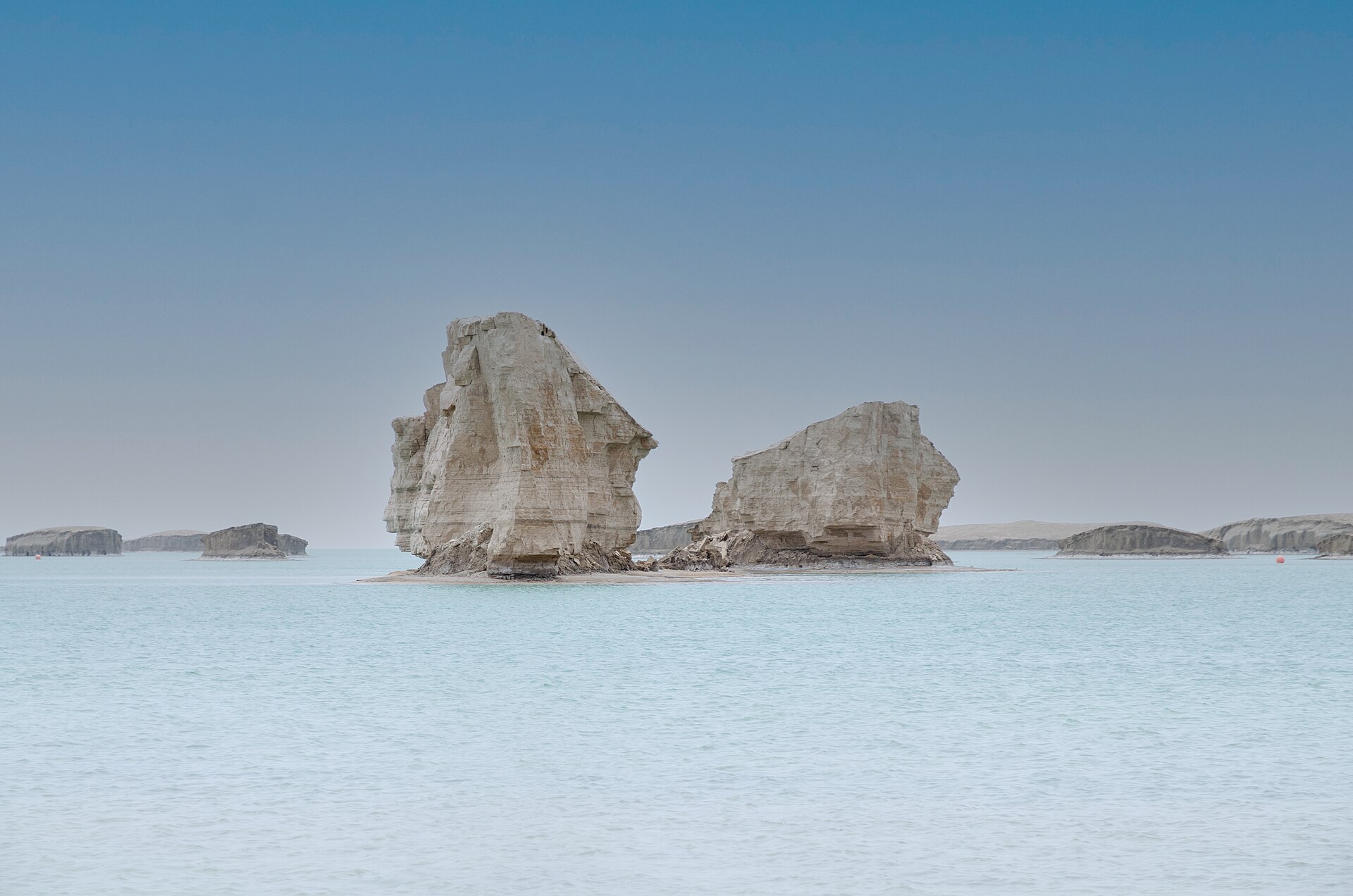
Wind-sculpted ridges rising straight out of a salt lake. This is the only place on earth where yardangs stand in water, and the desert around them is the landscape called the most Mars-like in China.
The Water Yardangs, known locally as Wusute, sit at about 2,700 m in the Qaidam Basin, on the fifth day of the Grand Route between Dachaidan and Dunhuang. Wind has carved long ridges out of soft rock, and here they rise directly out of a salt lake, so the formations appear to stand in the water. They run in long parallel ridges, and the pale salt around them makes the shapes stand out even from the road.
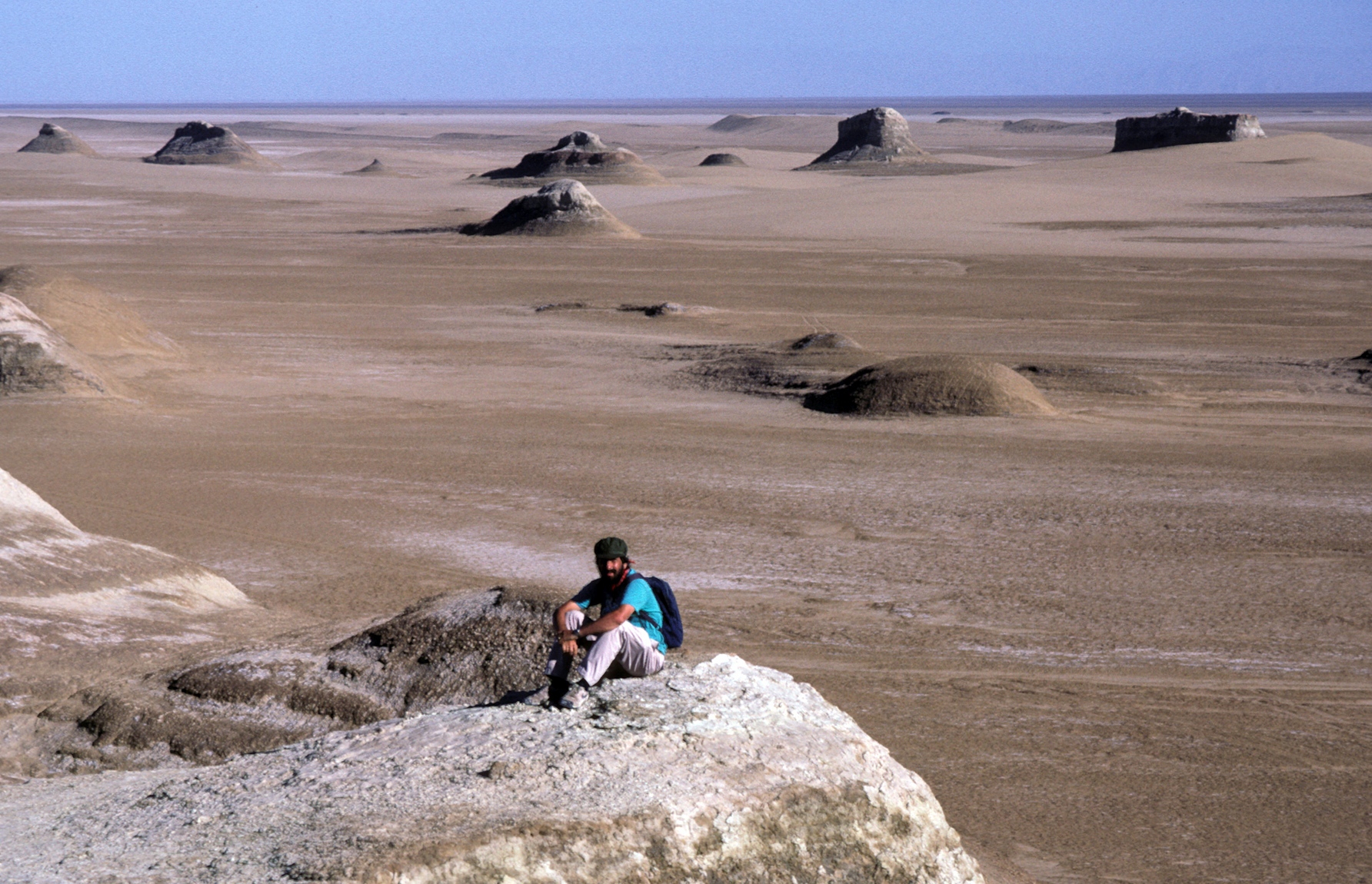
This is the only place on earth where yardangs stand in water rather than on dry ground. The surrounding basin is the region that local authorities and scientists call China's most Mars-like place: barren, red and grey, with almost no vegetation at all. China's first Mars simulation base, the Lenghu Mars Camp, opened in this basin in March 2019, 60 km west of Lenghu in Mangya. It is not on our route, and our nine-day itinerary does not enter Lenghu or Eboliang; we can only arrange it as a separate extension.
What to see
Yardangs standing in water
The only place on earth where wind-carved yardangs rise out of a salt lake rather than from dry ground.
Wusute, the local name
The formation is known as Wusute. Long ridges run roughly in parallel, sculpted by wind over a very long time.
A Mars-like basin
The Qaidam Basin is the area that local authorities and scientists call China's most Mars-like place: bare, red and grey.
The road between two deserts
The stage runs from Dachaidan towards Dunhuang across some of the emptiest country on the whole route.
Salt, wind and empty space
Wind and salt have shaped everything here. The air is dry, the ground is crusted and the horizon is enormous.
Lenghu Mars Camp (extension)
China's first Mars simulation base opened in this basin in March 2019, 60 km west of Lenghu. It is an extension, not part of the nine-day route.
How yardangs form in water
A yardang is a ridge of soft rock carved by wind into long, streamlined shapes. What makes this group unusual is where they stand: instead of rising from dry desert, they emerge directly from a salt lake, so the bases of the ridges are in the water and the pale crust runs between them. Nothing else on earth looks quite like it.
- Soft rock sculpted by wind over a long period.
- Long, parallel ridges aligned with the prevailing wind.
- Bases standing in a salt lake, not on dry ground.
- The only place on earth where yardangs meet water.
The Mars comparison, precisely
The Qaidam Basin is the region that local authorities and scientists call China's most Mars-like place, and the claim is measured rather than poetic: bare rock, salt, no vegetation and a dry, thin atmosphere. China's first Mars simulation base, the Lenghu Mars Camp, opened in this basin in March 2019, 60 km west of Lenghu in Mangya. Our nine-day route does not enter Lenghu or Eboliang, so we list the camp strictly as an optional extension, never as something included in the itinerary.
- Called the most Mars-like place in China by local authorities and scientists.
- China's first Mars simulation base opened in this basin in March 2019.
- The camp is an extension only and is not on the nine-day route.
Driving this stage
The stage from Dachaidan to Dunhuang is one of the longest on the route, and the yardangs are its centrepiece. There is no shade, no settlement and very little traffic, so the stop works best as a slow pause on a driving day rather than a long hike. The salt crust around the yardangs is fragile, and the guide will show you the ground you may use and the best angles; you should not walk out onto the crust or climb the ridges.
- A long driving day between Dachaidan and Dunhuang.
- No shade and almost no services on the way.
- Wind and salt are part of the landscape.
- Stay on the marked ground the guide points out.
- There is no shade and no cover here, so bring water, a hat and sunglasses.
- Wind can be strong and constant, so secure hats, scarves and camera straps.
- Stay on the marked areas; the salt crust and the soft rock are easy to damage.
- The stage is long, so treat it as a driving day with a stop rather than an all-day hike.
Frequently asked questions
What exactly is a yardang?
Is this the Mars base I have read about?
Can I walk among the yardangs?
Shall we plan your trip to Yardangs on the Water?
Tell us your dates and who is travelling, and we'll send a tailor-made itinerary for Yardangs on the Water and the rest of China.
Open WhatsApp nowDirect contact
Every channel reaches the same team in China. Pick whichever you already use.
WA WhatsApp+86 177 0971 7171 — the fastest way to reach us