Four complete itineraries, all private and all modifiable: you can cut days, add a destination or change the order. The prices are indicative for two people sharing a double room, with an English-speaking guide, private transport, high-speed trains and entrance fees included.
None of them stops at souvenir shops or includes compulsory tourist shows. If something doesn't suit the way you travel, we take it out.
Indicative price per person sharing a double room, excluding international flights. The final price depends on your travel dates.
These twelve circuits are laid out the same way: a short label, two paragraphs on what the route really is and who it suits, and four fixed facts — pace, best season, acclimatisation and who it is best for. Read the fact lines first to tell the routes apart.
7 · €1,490per person sharing a double room · excluding international flights · the final price depends on your travel dates
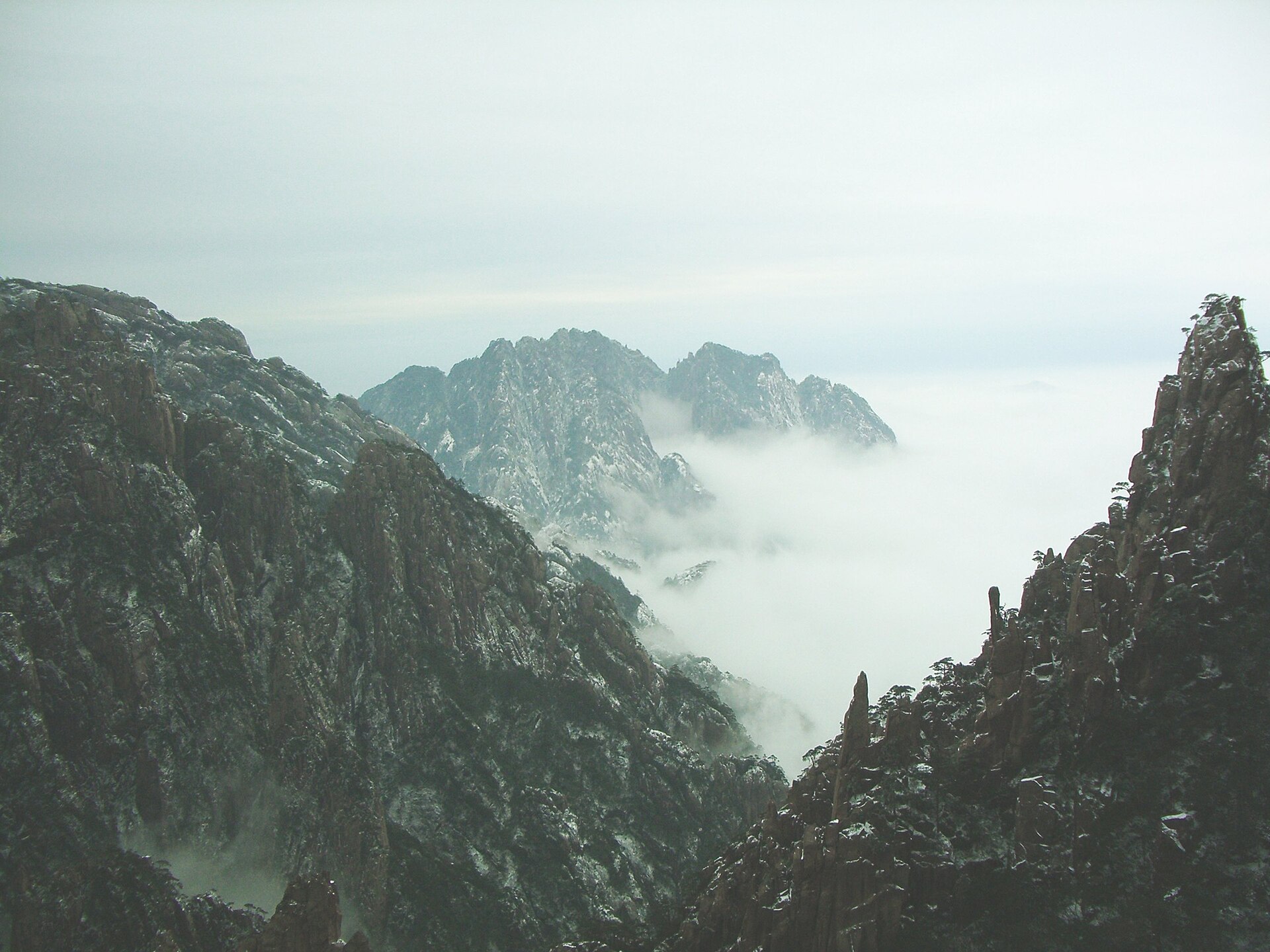
Seven days on foot, cable car and stone stairway, built around the mountain Chinese painters spent a thousand years trying to copy and the white-walled villages that supplied the merchants who paid for the art. It opens in Tunxi at 130 m with a free evening on the old street of ink shops and tea merchants, then the two UNESCO villages of Huizhou: Hongcun, with its half-moon pond and the lanes used in Crouching Tiger, Hidden Dragon, and the quieter Xidi, both around 200 m. A cable car then climbs Huangshan to 1,600 m and the carved steps lead between granite peaks to a night on the summit, so that sunrise is the first thing you see. Dawn comes at the Dawn Pavilion, when the sea of clouds fills the valleys, followed by Bright Summit and the Cloud-Dispelling Pavilion at 1,840 m before the descent. The trip ends at the hot springs, in old Tunxi and at Shexian with the Ming-dynasty Xu Guo archway.
It suits keen walkers and photographers, and anyone prepared to earn the view: expect four to six hours of steps a day, and almost no flat ground on the mountain, though the cable cars cut the worst of the climb. The reward is the sea of clouds at dawn, which is never guaranteed, so book two possible mornings if you can and treat whichever one delivers as a gift. It does not suit anyone unsteady on their feet, or travellers who want a restful holiday, because this is the most physically demanding week we offer in the east and the summit hotel is simple rather than luxurious. The altitude is modest, from 130 m at Tunxi to 1,840 m on Huangshan, so there is nothing to acclimatise to. April–May and September–November give the clearest skies; in winter the walkways can be icy.
- PaceActive: four to six hours of steps a day on the mountain, with cable cars cutting the worst of it.
- Best seasonApril–May and September–November for the clearest cloud seas; winter walkways can be icy.
- AcclimatisationNot a concern: the route runs from 130 m at Tunxi to 1,840 m on the Huangshan summit.
- Best forKeen walkers and photographers, and anyone who wants to earn the view on foot.
- Arrival in Tunxi (Huangshan)
- Hongcun and Xidi
- Climb Huangshan
- Sunrise and the classic peaks
- Down to Tunxi
- +2
See the itinerary8 · €1,690per person sharing a double room · excluding international flights · the final price depends on your travel dates
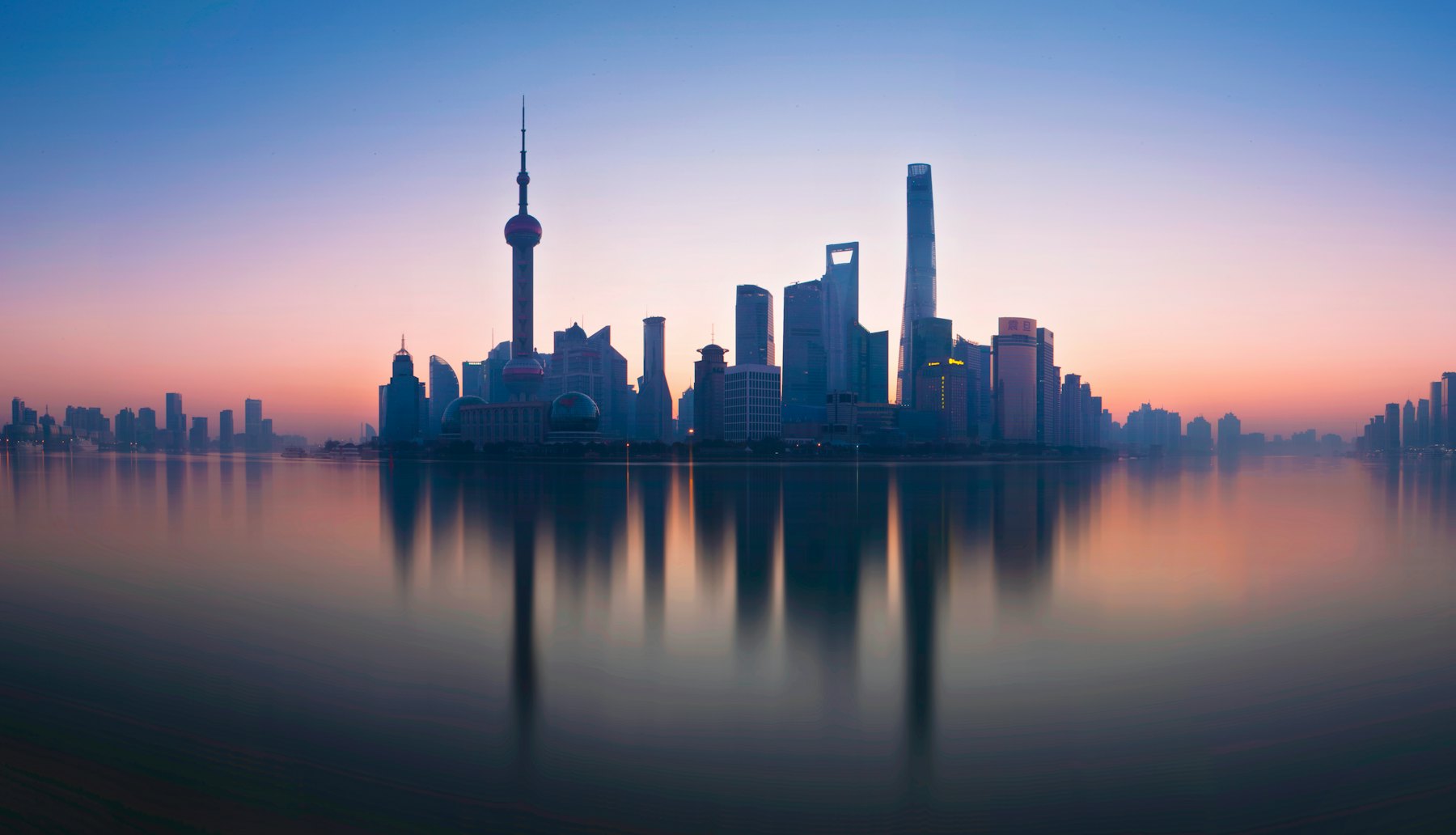
Eight days at walking pace through the Yangtze delta, with short distances and fast trains instead of long days on the road. It starts in Shanghai at 4 m with the Bund, a Pudong viewing deck and the plane trees and 1920s villas of the French Concession, the best district in the city for simply walking. A high-speed train covers the twenty-five minutes to Suzhou for the Humble Administrator's Garden and the Master of the Nets, the finest of China's scholar gardens, and then a drive leads to Wuzhen, where you sleep inside the old town among canals, stone bridges and wooden houses lit at night, once the day visitors have gone home. The route moves on to Hangzhou and West Lake at 10 m, the landscape Chinese poetry has praised for a thousand years, with its causeways, pagodas and the Leifeng Pagoda at dusk, the Longjing tea villages and the Buddhist grottoes of Lingyin Temple, before returning to Shanghai for a last free afternoon.
It is the easiest trip we offer and a gentle first taste of China: short stages, fast trains, no long drives and very little altitude, with everything from the gardens to the tea fields close to sea level. It suits families, couples and older travellers who want comfort and culture rather than adventure, and it fits neatly between Beijing or Xi'an and a flight home. It does not suit anyone hunting dramatic mountains, deserts or remote minority cultures, because the rewards here are gardens, canals, food and city life, and the walking is easy and mostly flat. March to May and October to November are the best months; avoid Golden Week in early October, when the water towns fill to bursting, and the plum-rain season of June, when the delta turns humid and wet.
- PaceEasy: short stages, fast trains and no long drives, with light and mostly flat walking.
- Best seasonMarch–May and October–November; avoid Golden Week and the humid June rains.
- AcclimatisationNot an issue: every stop is close to sea level, from 4 m in Shanghai to 10 m at West Lake.
- Best forFamilies, couples and older travellers wanting comfort, gardens and canals, not adventure.
- Arrival in Shanghai
- Shanghai: the Bund and beyond
- Suzhou and its classical gardens
- Wuzhen water town
- Hangzhou and West Lake
- +3
See the itinerary9 · €1,690per person sharing a double room · excluding international flights · the final price depends on your travel dates
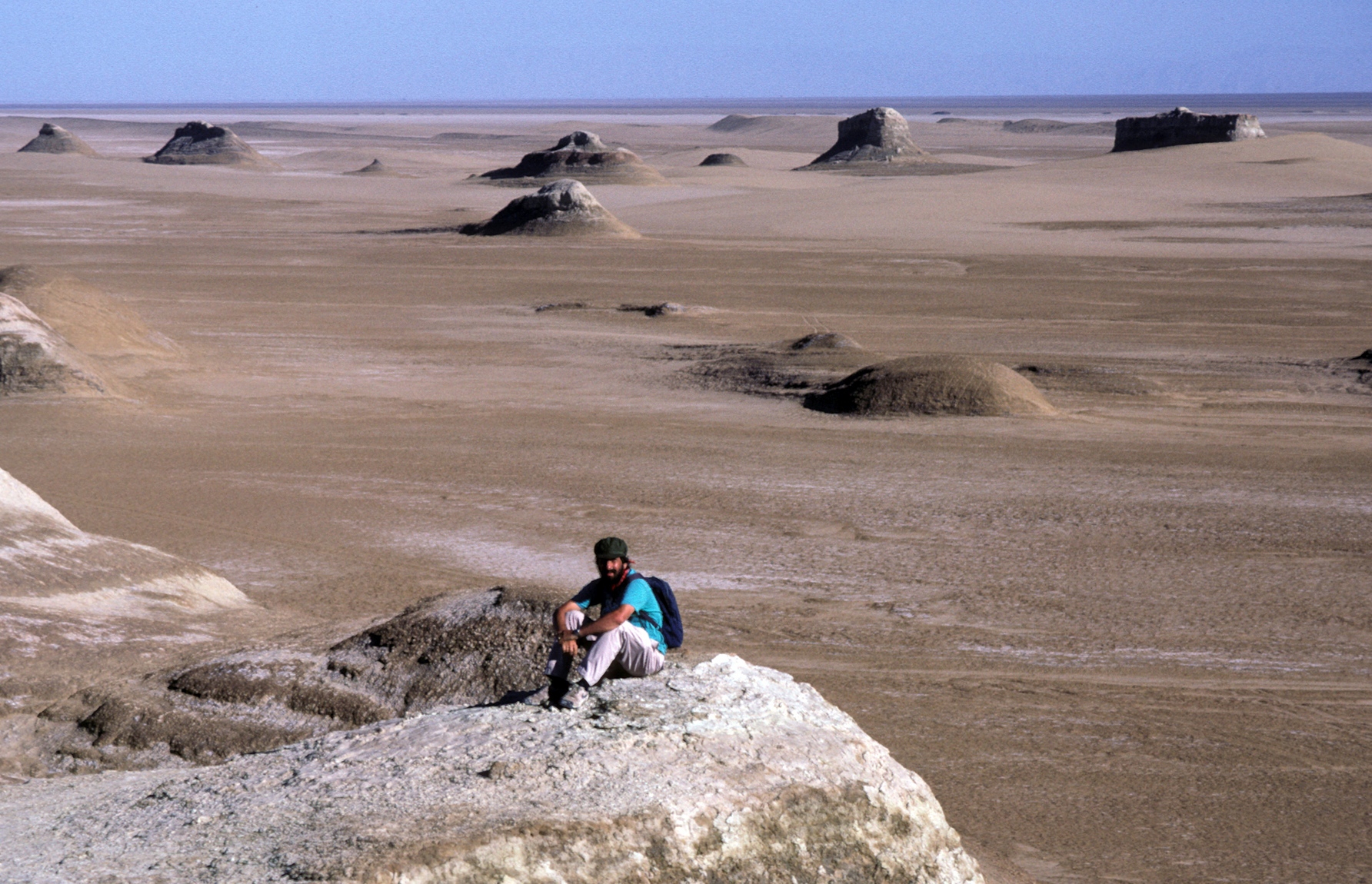
Nine days and roughly 2,000 kilometres across the Tibetan plateau, from Xining out to Dunhuang and back through Qilian. The route opens at Kumbum Monastery (2,275 m), runs the southern shore of Qinghai Lake at 3,194 m, and reaches Chaka Salt Lake at dawn, when the still water turns the ground into a mirror before the coaches arrive. It carries on through the emerald lakes of Dachaidan, the yardangs rising out of a salt lake in the middle of the desert, the Mogao Caves at Dunhuang with their 45,000 m² of wall painting, the Mingsha dunes at sunset, the last Great Wall fortress at Jiayuguan and the 24-million-year-old layers of Zhangye Danxia. Stages of up to 400 km make this a road trip in the fullest sense: the drive is often the attraction.
It suits travellers who are happy to spend long hours in a private car and who want landscape rather than monuments — deserts, salt lakes and high-altitude meadows are the whole point. The sleeping altitude never goes above 3,194 m at Qinghai Lake and the climb is gradual, so altitude is rarely a problem provided day one stays easy and the vehicle carries oxygen on board. It does not suit anyone after a relaxed city break, anyone who dislikes long drives, or anyone expecting a monument every two hours. If you want temples and skylines on a short schedule, the classic city circuit fits far better.
- PaceLong driving days of up to 400 km, in a private car with a driver and oxygen on board.
- Best seasonJune to September; outside that window some sections have snow and the services are closed.
- AcclimatisationGradual, from 2,275 m at Xining to a maximum of 3,194 m at Qinghai Lake. Day one is kept easy.
- Best forLandscape, photography, deserts and plateau scenery rather than city monuments.
- Xining and Kumbum Monastery
- Qinghai Lake (Koko Nor)
- Chaka Salt Lake: the mirror of the sky
- Dachaidan Emerald Lake
- Yardangs on the water
- +4
See the itinerary9 · €1,890per person sharing a double room · excluding international flights · the final price depends on your travel dates
Nine days that pair the country's best-loved animal with its clearest water. It starts in Chengdu at around 500 m with the giant panda research base at opening time, when the pandas are fed and active before they sleep through the midday heat, then the teahouses of People's Park, the lanes of Kuanzhai Xiangzi, Wenshu Monastery and Jinli. From there the route turns north into the mountains of Sichuan, resting the first afternoon in the Jiuzhaigou valley at 2,000 m to acclimatise. Two full days follow inside the park: Rize Valley at 3,000 m, with the Primeval Forest, Five Flower Lake and the Panda Lake waterfalls, then the lower Shuzheng valley and Zechawa climbing to Long Lake at 3,100 m, all on park shuttles and wooden boardwalks. A day at Huanglong adds travertine terraces at 3,500 m, reached by cable car, before the return to Chengdu at 500 m and an optional onward train to Chongqing.
It suits families, food-lovers and anyone who wants wildlife and scenery rather than monuments. The bulk of the trip is gentle; the only real variable is height, since the valley sits between 2,000 and 3,100 m and Huanglong reaches 3,500 m, so the first afternoon is deliberately quiet and the vehicle carries oxygen. It does not suit travellers who want the classic imperial circuit of Beijing, Xi'an and Shanghai, or anyone who cannot face an early start, because the panda base is worth it only in the first hour. October is the finest month, for autumn colour and the bluest water, and spring is quieter; the park can close without notice after heavy rain or an earthquake, so every departure is confirmed with the park beforehand.
- PaceComfortable: two city days in Chengdu, then three unhurried days among the lakes and terraces.
- Best seasonOctober for autumn colour and the clearest water; spring is quieter and winter freezes the lakes blue.
- AcclimatisationGentle but real: the valley sits at 2,000–3,100 m and Huanglong at 3,500 m, with oxygen on board.
- Best forFamilies, food-lovers and travellers who want pandas, lakes and terraces, not monuments.
- Arrival in Chengdu
- The giant panda research base
- Wenshu Monastery and Jinli
- Transfer to Jiuzhaigou
- Rize Valley
- +4
See the itinerary9 · €2,190per person sharing a double room · excluding international flights · the final price depends on your travel dates
Nine days that combine three nights on the Yangtze, a high-speed train and two of China's fastest-moving cities. It starts in Chongqing at 244 m with Hongya Cave lit up over the river, then a ride on the Yangtze cable car and the afternoon boarding of your ship. The cruise calls at Shibaozhai, a twelve-storey pavilion built against a cliff, or Fengdu, and passes the two great gorges: short, sheer-walled Qutang and twelve-peak Wu, with sampan excursions into the lesser gorges. At Sandouping the passage ends at the Three Gorges Dam and its five-stage locks that lift ships 113 m; you disembark at Yichang for a high-speed train to Shanghai, about six hours city centre to city centre. The last days are Shanghai's: the Bund facing the Pudong skyline, a viewing deck, Yu Garden and the Old Town, and a free day for the museum, the Jade Buddha Temple or the water town of Zhujiajiao.
It is the most comfortable way to cover a lot of ground and the easiest route for anyone who prefers the scenery to come to them: three nights on the ship, a high-speed train, and very little walking or driving. It suits families, older travellers and anyone who wants China without long stairways or altitude, since Chongqing sits at 244 m and Shanghai at 4 m, so nothing here is high. The cruise runs year-round and downstream, from Chongqing to Yichang, which brings the ports at the best times of day; it does not suit travellers who want remote landscapes, minority cultures or hands-on hiking, or anyone who dislikes being on water for three nights. Spring and autumn are mild, while high summer along the river is hot and humid and the busiest time on board.
- PaceRelaxed: three nights afloat, a high-speed train and two cities, with very little walking.
- Best seasonYear-round; spring and autumn are mild, while high summer along the river is hot and humid.
- AcclimatisationNot an issue: Chongqing sits at 244 m and Shanghai at 4 m, all close to sea level.
- Best forComfort, older travellers and anyone who would rather the scenery came to them.
- Arrival in Chongqing
- Chongqing, then board the cruise
- Shibaozhai and the river beyond
- The Three Gorges: Qutang and Wu
- The Three Gorges Dam and the locks
- +4
See the itinerary10 · €1,890per person sharing a double room · excluding international flights · the final price depends on your travel dates
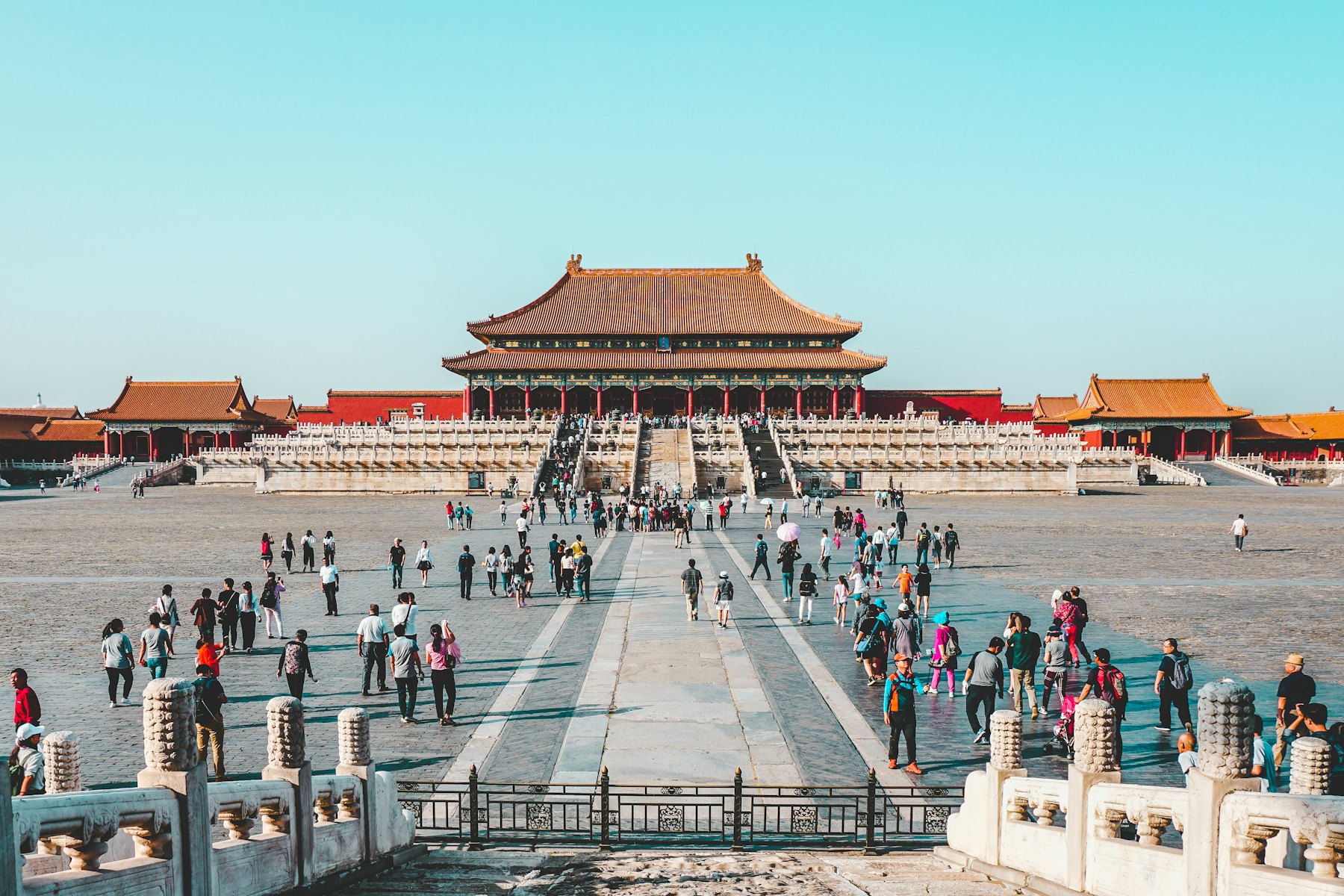
Ten days and three cities — Beijing, Xi'an and Shanghai — linked by high-speed train rather than by plane. In Beijing the trip covers the imperial axis: Tiananmen Square, the Forbidden City with its 980 buildings, the view over the rooftops from Jingshan Park, and a full day on the Great Wall at Mutianyu, cable car up and toboggan down. Xi'an adds the city wall by bike, the Muslim Quarter at dusk, and the Terracotta Army across all three pits and the bronze chariot hall. Shanghai closes the loop with Yu Garden, the Bund at dusk, a Pudong viewing deck, the Shanghai Museum and the Jade Buddha Temple. A free day at the end allows a high-speed run to Suzhou or Hangzhou.
This is the most comfortable circuit in the catalogue and the natural first trip to China: three cities, fast trains and few hotel changes, which keeps the packing and the transfers to a minimum. It suits families, first-timers and anyone who wants the country's essentials done properly rather than rushed, and it runs year-round, with April–May and September–October giving the best light. It does not suit travellers hunting remote landscapes, minority cultures or altitude; the highlights here are urban and imperial, the walking is around palaces and riversides, and the rhythm is deliberately gentle rather than adventurous.
- PaceModerate: three cities over ten days, with high-speed trains instead of long drives.
- Best seasonYear-round. April–May and September–October are the best windows; avoid Golden Week (1–7 October) and Chinese New Year.
- AcclimatisationNot an issue: every stop on the route sits at or near sea level.
- Best forFirst trips, families, and the classic monuments of China.
- Arrival in Beijing
- Beijing: the imperial axis
- Great Wall at Mutianyu
- Temple of Heaven and deeper Beijing
- High-speed train to Xi'an
- +5
See the itinerary10 · €1,990per person sharing a double room · excluding international flights · the final price depends on your travel dates
Ten days and two of China's signature landscapes, linked by a short internal flight. It opens in Zhangjiajie at 183 m, with a base in Wulingyuan minutes from the park gate, then climbs into Yuanjiajie at 1,074 m — the sandstone columns behind the floating mountains of Pandora — by the Bailong lift, the world's tallest outdoor elevator. A second day crosses to Tianzi Shan by shuttle and a 2.5 km cable car to 1,260 m; a third walks the 7.5 km trail along Golden Whip Stream at 600 m, then the glass bridge over a 300 m canyon on a timed slot. Tianmen Mountain at 1,518 m is a separate park, with the world's longest cable car, the 99-bend road and the 999 steps to Heaven's Gate. The route then drops to Fenghuang at 450 m, flies south to Guilin at 150 m, cruises the Li River to Yangshuo at 110 m — the karst of the 20-yuan note, finest near Xingping — and ends among the Longji rice terraces at 1,100 m.
This is the trip for the two views almost everyone already has in their head, and it delivers both properly rather than as day trips. It suits travellers willing to mix lifts, cable cars and real stairways — expect four to six hours on your feet on the mountain days — and it works for families provided the steep sections are done by lift and cable car instead of on foot. The walking is the crux, not the altitude: the highest point is Tianmen at 1,518 m and the valleys sit near 150 m, so there is nothing to acclimatise to. It does not suit anyone who dislikes steps, or who wants history, temples and city skylines, because there is almost nothing imperial here. The window runs from March to November; April–May and September–October give the clearest views, while high summer brings heat, humidity and the heaviest crowds.
- PaceSteep but manageable: two mountain parks in Zhangjiajie, then the flat karst country of Guilin.
- Best seasonMarch to November; April–May and September–October are clearest, while summer is hot and busy.
- AcclimatisationNot a concern. The high point is Tianmen Mountain at 1,518 m; the valleys sit near 150 m.
- Best forTravellers who want China's two signature landscapes in one trip and accept long stairways.
- Arrival in Zhangjiajie
- Yuanjiajie and the Avatar mountains
- Tianzi Shan and its cable car
- Golden Whip Stream and the glass bridge
- Tianmen Mountain and Heaven's Gate
- +5
See the itinerary10 · €1,990per person sharing a double room · excluding international flights · the final price depends on your travel dates
Ten days across the most varied province in China, from the limestone forest of Shilin to the Tibetan monastery of Songzanlin, climbing steadily the whole way. It begins in Kunming at 1,890 m, the Spring City, then a day in the Shilin Stone Forest, a UNESCO site of narrow corridors and hidden clearings at 1,750 m. A high-speed train reaches Dali at 1,900 m, its Bai old town beneath the Cangshan range, and the shore of Erhai Lake at 1,972 m, where Xizhou keeps white-walled courtyards and a working indigo-dyeing workshop. Lijiang follows at 2,400 m, a UNESCO maze of canals and stone bridges fed by Jade Dragon snowmelt, then the cable car up Jade Dragon Snow Mountain to a glacier park at 4,506 m and the 15th-century frescoes of Baisha. The route crosses Tiger Leaping Gorge at 1,800 m, the deepest in Asia, and ends in Shangri-La at 3,200 m with Songzanlin Monastery, the old town of Dukezong and the meadows of Napa Hai at 3,270 m.
It suits travellers who want culture, mountain scenery and food to change every few hours, and it is the most rewarding route for anyone interested in living minority cultures, with Bai, Naxi and Tibetan towns all on one line. The ascent is deliberately gradual, from 1,890 m at Kunming, which is the gentlest way to reach the plateau, but the highest night is still Shangri-La at 3,200 m and the glacier park reaches 4,506 m, so it does not suit anyone who would rather stay near sea level or who dislikes long road stages between towns. March to May and September to November give the driest, clearest weather; summer is the monsoon, with daily rain in Lijiang and Shangri-La, and winter is sunny but cold after dark.
- PaceModerate, with some long road stages and one high cable car, but no technical walking.
- Best seasonMarch–May and September–November; summer is the monsoon and winter is dry but cold at night.
- AcclimatisationGradual, from 1,890 m at Kunming to a night at 3,200 m in Shangri-La and 4,506 m on the glacier.
- Best forCulture, mountain scenery and food, with Bai, Naxi and Tibetan towns in a single route.
- Arrival in Kunming
- The Stone Forest (Shilin)
- Train to Dali
- Erhai Lake and Xizhou
- Lijiang and the Naxi old town
- +5
See the itinerary11 · €2,690per person sharing a double room · excluding international flights · the final price depends on your travel dates
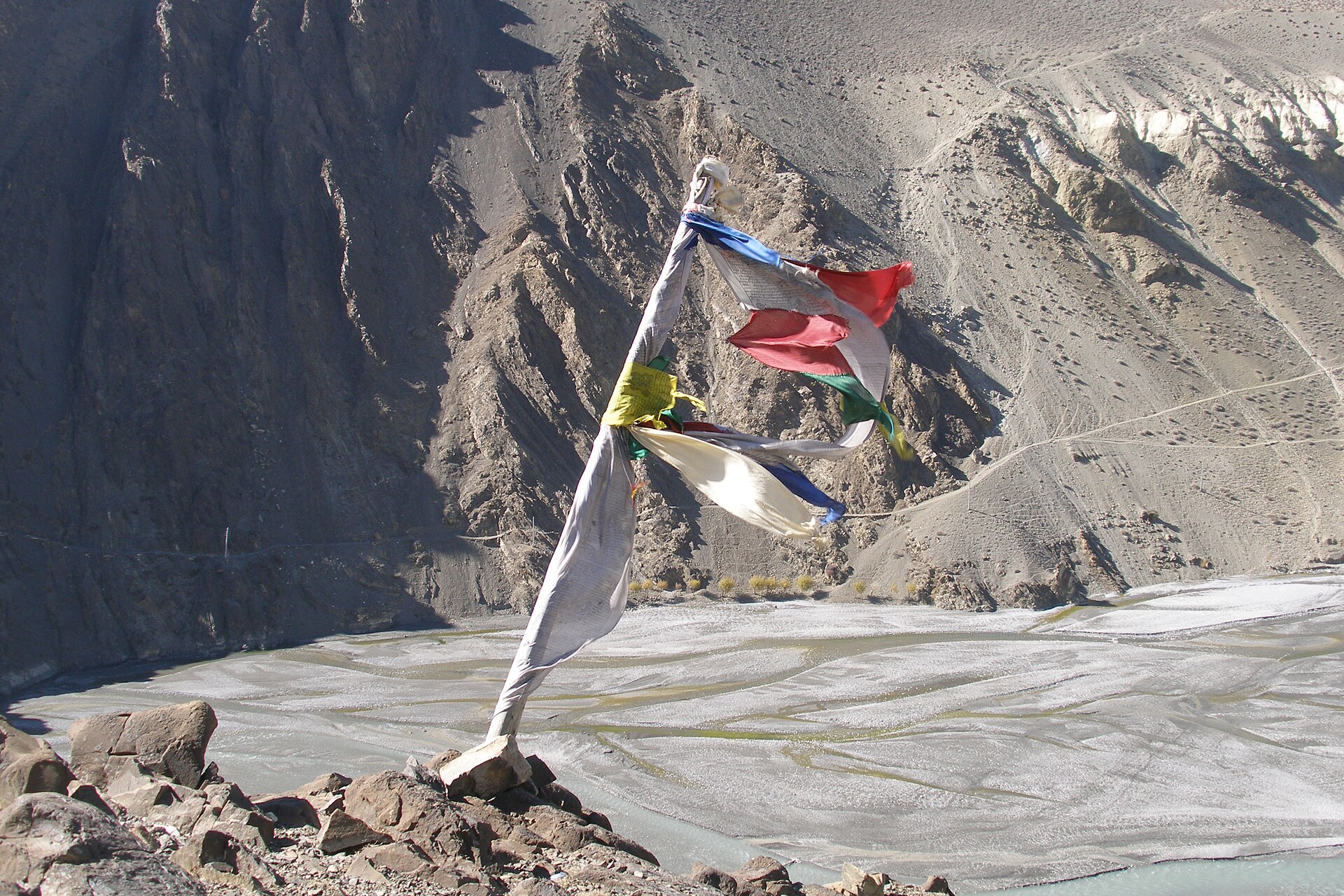
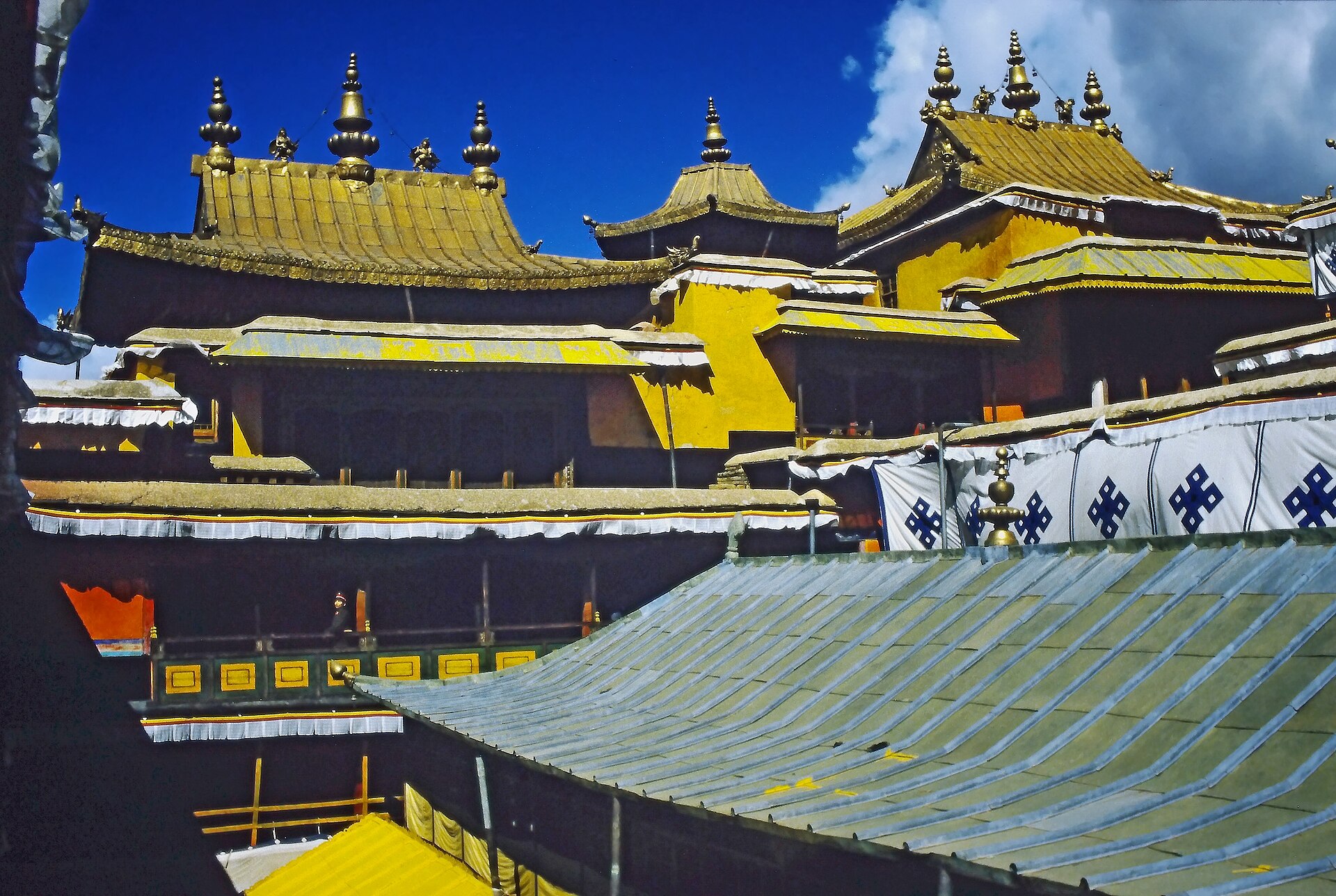
Eleven days and the highest route we run, gained stage by stage so that the altitude never beats you. It begins with a flight to Lhasa at 3,650 m and a first day of complete rest — no sightseeing, plenty of water, no alcohol — then a slow day at the Jokhang and the pilgrims circling Barkhor Street, the Potala Palace entered on a timed slot after three hundred steps, the courtyard debates at Sera, Drepung Monastery and the Norbulingka. The road west to Shigatse crosses the Khamba La pass above the turquoise Yamdrok Lake at 4,441 m, with the Karola glacier beyond, and stops at Tashilhunpo, seat of the Panchen Lamas, at 3,836 m. From Shegar at 4,300 m the route climbs through the reserve gates to Rongbuk, Everest Base Camp, at 5,200 m, where the north face of the mountain fills the valley at sunset. The return passes Sakya Monastery and descends to Lhasa along the Friendship Highway.
It suits travellers who want depth over speed and who accept that altitude, not fitness, sets the rhythm: the days are short on walking but several nights are spent above 3,650 m, and the highest is Everest Base Camp at 5,200 m. Entry to Tibet requires a permit, an accompanying Tibetan guide and an itinerary approved in advance, all arranged here, so plans need a little flexibility and buffer days; it does not suit anyone locked to fixed dates that cannot move, anyone with heart or lung conditions, or anyone who simply dislikes being at height. The window is May to October, when the passes and the Everest road are open; outside it, snow blocks the high passes and the camp closes. If you would rather not sleep that high, the Chengdu and Jiuzhaigou route rarely goes above 3,500 m.
- PaceDemanding, and the hardest route we run, because of altitude rather than physical effort.
- Best seasonMay to October; in winter snow blocks the high passes and Everest Base Camp closes.
- AcclimatisationThe crux: Lhasa at 3,650 m with a full rest day, then Rongbuk at 5,200 m, with oxygen on board.
- Best forEverest and the monasteries of the plateau, with patience for permits and a gradual ascent.
- Arrival in Lhasa: complete rest
- Jokhang Temple and Barkhor
- Potala Palace and Sera
- Drepung and Norbulingka
- Drive to Shigatse via Yamdrok Lake
- +6
See the itinerary12 · €2,490per person sharing a double room · excluding international flights · the final price depends on your travel dates
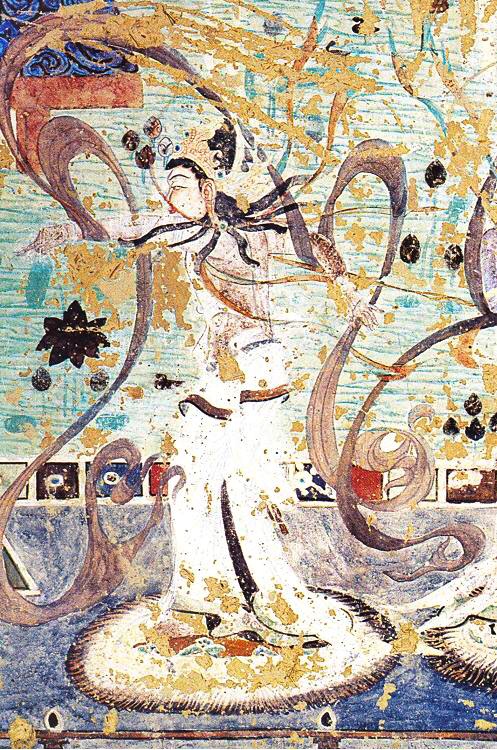
Twelve days overland along the Silk Road, from the terracotta army at Xi'an to the bazaars of Ürümqi, with landscapes that change completely every couple of hundred kilometres. It opens in Xi'an at 400 m with the Muslim Quarter around the Great Mosque, then all three pits of the Terracotta Army in the morning, the 14 km city wall by bike and the Drum and Bell Towers, before an evening flight west to Dunhuang at 1,139 m. There the Mogao Caves hold 492 painted temples and 45,000 m² of wall painting, and the Mingsha dunes and Crescent Lake are best at sunset. The road runs on to Turpan at 32 m, the hottest and lowest place in China, for the ruined cities of Gaochang and Jiaohe and the 2,000-year-old karez channels, then to Ürümqi at 800 m for the Grand Bazaar and the Xinjiang Regional Museum, and a day at Tianchi, the Heavenly Lake, at 1,910 m.
It suits travellers who want the road itself — deserts, oases and ruins rather than polished monuments — and who are curious about the far west of China, where the culture is more Central Asian than Chinese. It is a genuine overland route, so expect long drives: Dunhuang to Turpan is about five hours and Turpan to Ürümqi three, though the longest leg is broken by the overnight flight west. The altitudes are low, from 32 m below sea level at Turpan to 1,910 m at Tianchi, so there is nothing to acclimatise to, and the real variables are heat and distance. It does not suit anyone who dislikes long drives or desert summer, and July and August are brutally hot. May, June, September and October are the best months, when the caves and the dunes are comfortable and the oases are at their greenest.
- PaceA road trip: several long drives, though the longest leg is replaced by an overnight flight west.
- Best seasonMay, June, September and October; July and August are brutally hot in the desert.
- AcclimatisationNot a concern, from 32 m below sea level at Turpan to 1,910 m at Tianchi Lake.
- Best forHistory, deserts, oases and ruined cities, for travellers who enjoy the road itself.
- Arrival in Xi'an
- The Terracotta Army
- City wall and departure west
- Dunhuang and the Mogao Caves
- Mingsha dunes and Crescent Lake
- +7
See the itinerary13 · €2,290per person sharing a double room · excluding international flights · the final price depends on your travel dates
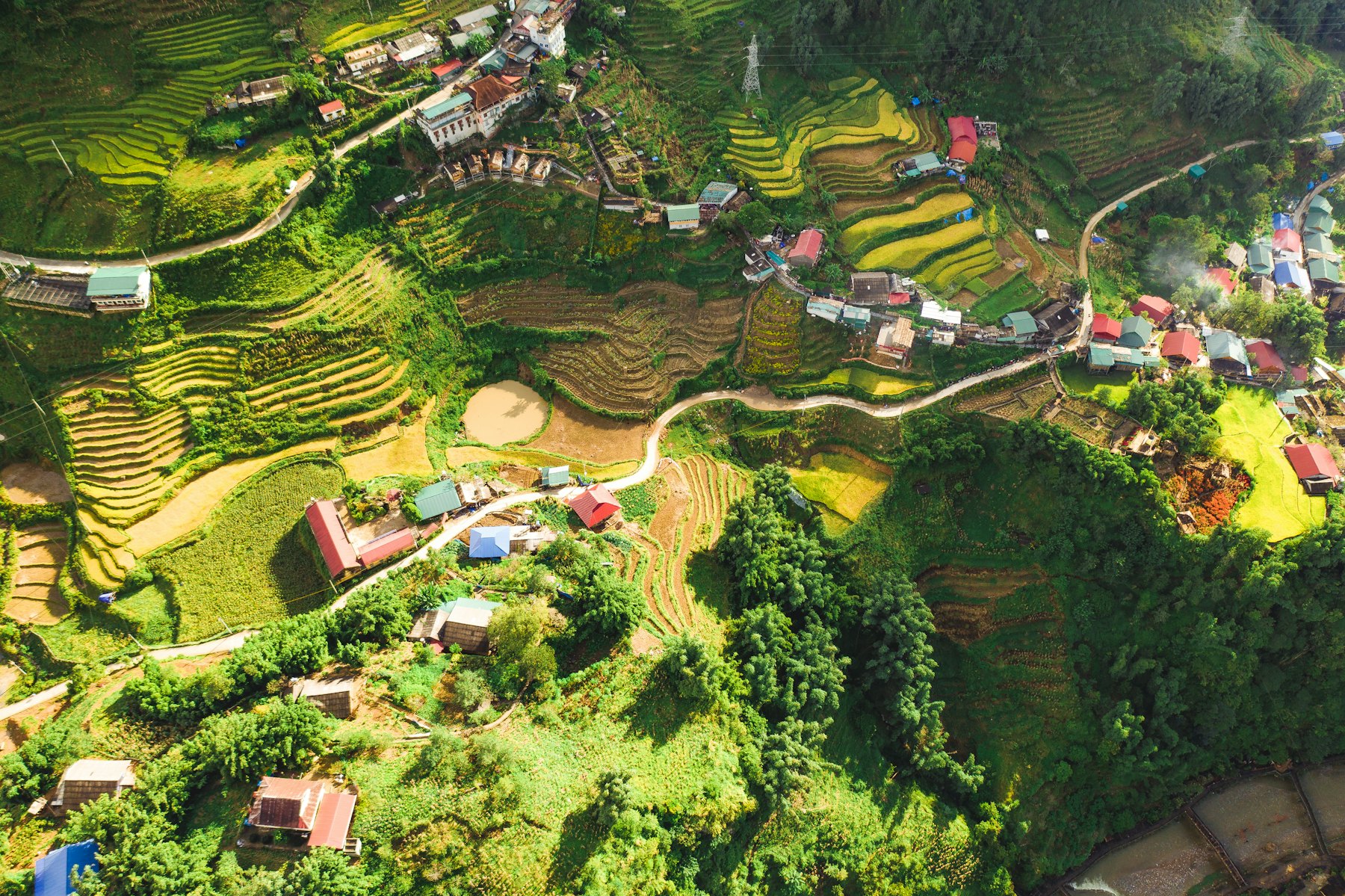
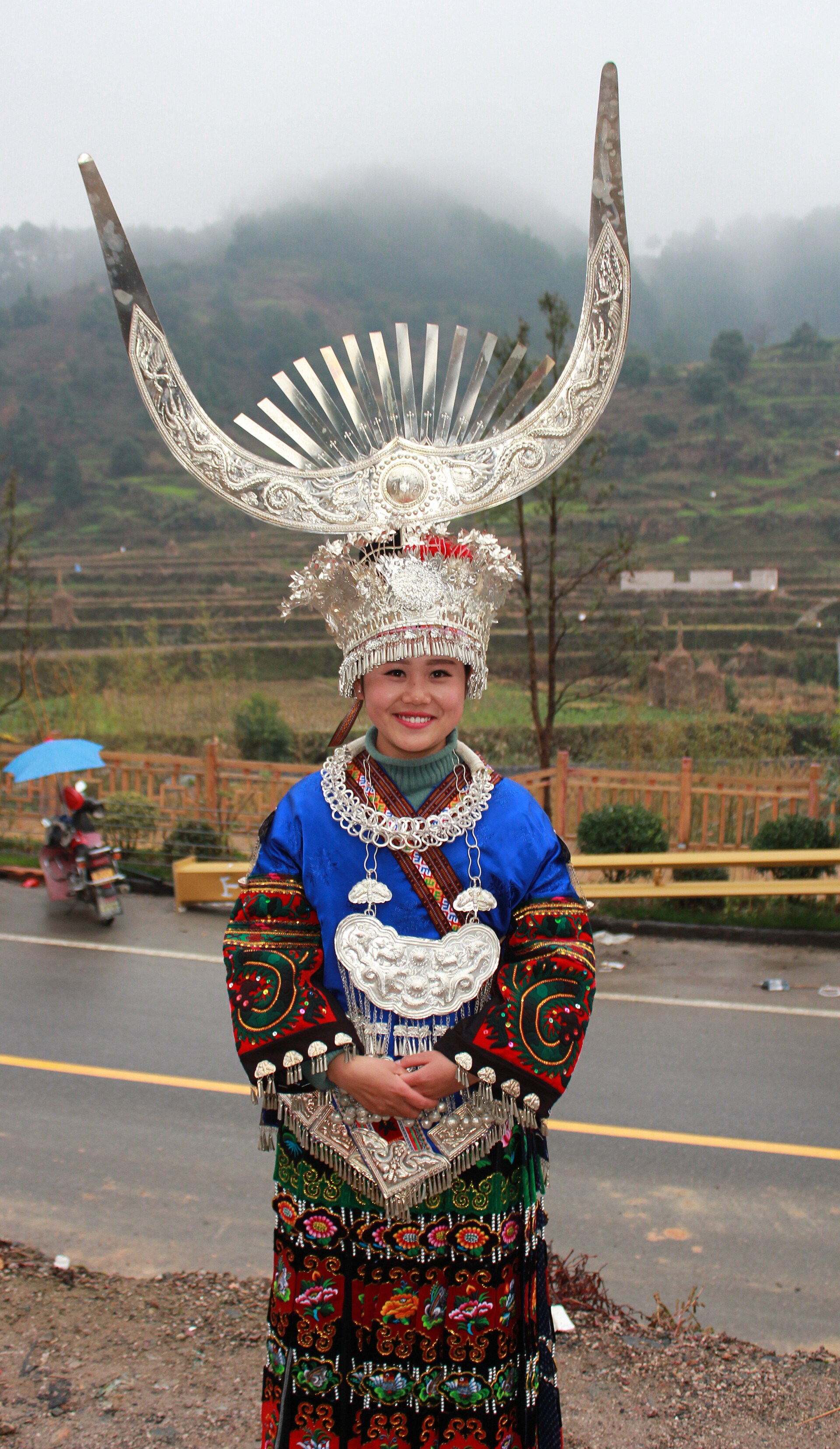
Thirteen days through Guizhou and Yunnan, built around the villages of the Miao, Dong, Naxi and Bai peoples rather than staged folklore. It starts in Guiyang and moves to Xijiang, the largest Miao settlement in China, with a thousand wooden houses stacked on the hillside, a weekly local market that shifts with the calendar, and an embroidery workshop with the artisans who make it. Then Zhaoxing and its five Dong drum towers, with polyphonic singing in the village in the evening. Onward to Guilin and a Li River cruise through the Xingping stretch, a night up among the Longji rice terraces with the Zhuang and Yao communities, and a flight into Yunnan for the Naxi old town of Lijiang, the Dongba pictographic script, Baisha's 15th-century frescoes and Dali with its Bai houses and indigo-dyeing.
It suits travellers interested in living culture, craft and food, and it rewards curiosity more than comfort: some nights are in rural guesthouses, and there are several transfers, including two domestic flights and long road stages between villages. The window runs from March to November, with Yunnan and Guizhou at their finest in March and April, before the heat and the rains. It does not suit anyone looking for five-star ease throughout, nor travellers who want the classic imperial China — there is almost nothing monumental here, and that absence is exactly the point.
- PaceRelaxed between stops but with several transfers, including domestic flights and long road stages.
- Best seasonMarch to November, and best in March–April before the heat and the rains arrive in the south-west.
- AcclimatisationNot a concern: the route stays low, mostly below 2,000 m.
- Best forMinority cultures, local markets, craft workshops and south-west Chinese food.
- Arrival in Guiyang
- Xijiang Miao village
- Weekly market and Miao embroidery
- Zhaoxing Dong village
- On to Guilin
- +8
See the itinerary15 · €3,290per person sharing a double room · excluding international flights · the final price depends on your travel dates
Fifteen days and the most complete journey in the catalogue. It opens in Beijing with the Forbidden City, the hutongs and the Great Wall at Mutianyu, then flies to Xining to enter the plateau gently at 2,275 m. From there it follows Kumbum Monastery, the southern shore of Qinghai Lake at 3,194 m, Chaka Salt Lake at sunrise and the Mogao Caves at Dunhuang before flying on to Lhasa. In Lhasa it builds in a full rest day at 3,650 m, then the Jokhang, Barkhor Street, the Potala Palace and the afternoon debate of the monks at Sera Monastery. It closes in Gannan with Labrang Monastery at Xiahe (2,900 m), a night in a Tibetan family home and the grasslands of Langmusi at 3,300 m, with the Tibet permit and the mandatory Tibetan guide arranged for you.
It suits travellers who want depth over speed and who accept that altitude, not fitness, sets the rhythm: several nights are spent above 3,000 m and the first day in Lhasa is deliberately empty. Entering Tibet requires a permit, an accompanying guide and an itinerary approved in advance, so plans need a little flexibility and buffer days. It does not suit anyone with only a short holiday, anyone locked to fixed dates that cannot move, or anyone who dislikes being at height — the window is May to October, and outside it some mountain roads close and village nights become too cold.
- PaceDemanding: the hardest route we run, because of altitude rather than physical effort.
- Best seasonMay to October; outside that window some mountain routes close and village nights are too cold.
- AcclimatisationThe crux of the trip: several nights above 3,000 m, Lhasa at 3,650 m, and a full rest day on arrival.
- Best forTibet and its monasteries, with patience for permits and a gradual ascent.
- Arrival in Beijing
- Imperial Beijing
- Great Wall at Mutianyu
- Flight to Xining
- Kumbum Monastery
- +10
See the itineraryPeak domestic travel falls on Golden Week (1–7 October) and Chinese New Year, when crowds and prices jump across the whole country — book well ahead or shift the dates.