
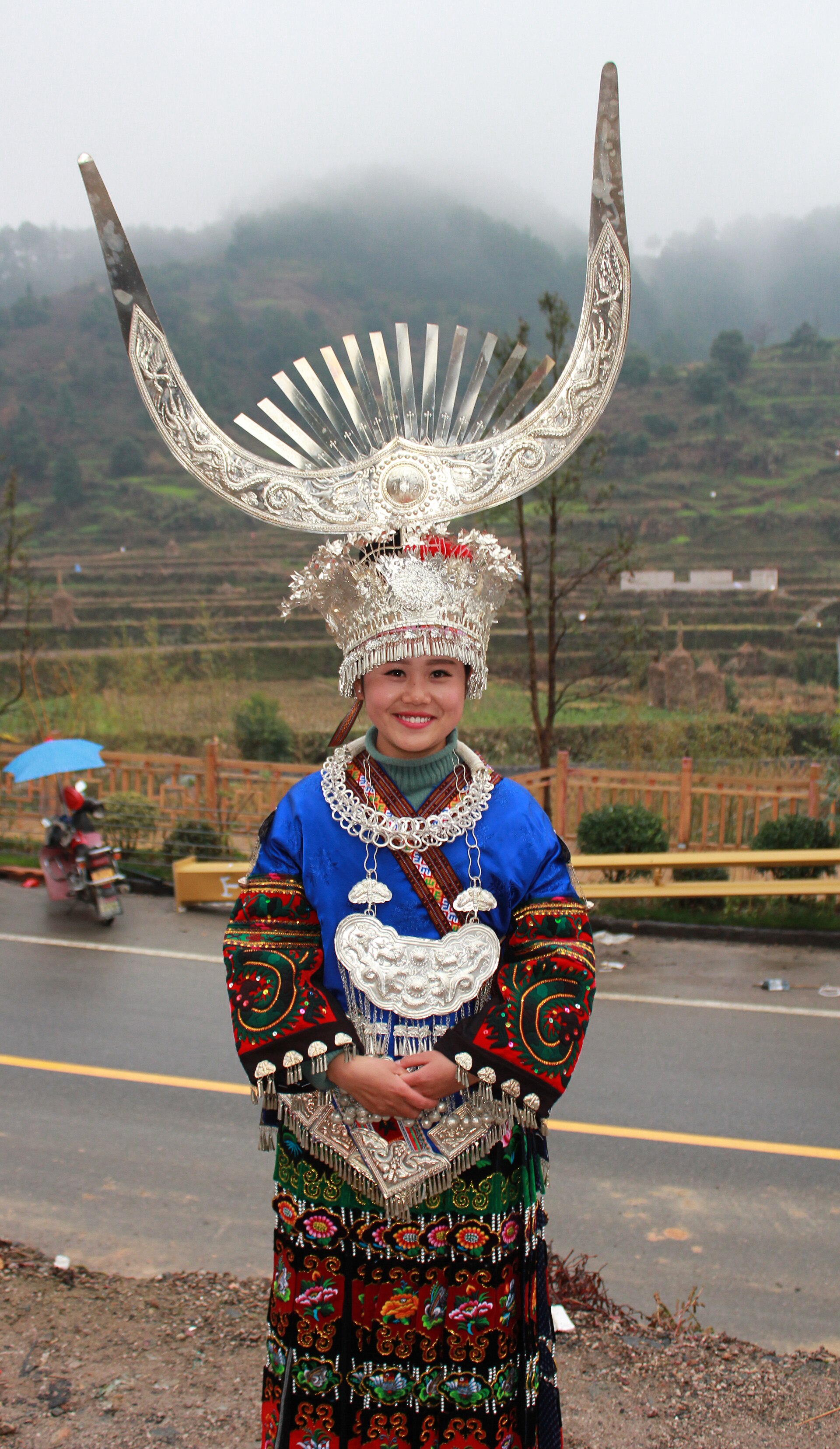
When people say China is a country of a single culture, they are telling a half-truth. The Han majority is around ninety per cent of the population, but the country is home to 55 officially recognised ethnic minorities, with their own languages, scripts, dress, festivals, architecture and cooking. Many have more than a million people; some have only a few tens of thousands. Visiting that world for real, without reducing it to a forty-minute performance, is one of the richest experiences the country offers, and also one of the most delicate.
Who the 55 minorities are, and why 55
The number is not accidental. After the founding of the People's Republic, in the 1950s, the state carried out an ethnographic classification that grouped hundreds of communities into official categories. The criteria combined language, territory, culture and self-identification. The result was a closed list of 55 groups besides the Han, and that figure has not changed since, even though within each group there are enormous internal differences.
That means two things. First, that within a single minority there may be mutually unintelligible dialects and completely different dress from one village to the next. Second, that there are communities that never entered the list and still seek recognition. For the traveller, the important thing is not to treat minorities as one block: the Miao of one valley and those of the next can be worlds apart.
The seven cultures you will actually meet
No single trip covers all 55. These are the seven peoples you will work with most, above all in the south-west and on the Tibetan plateau, and the essentials of each.
- Miao — Guizhou and Hunan. A Hmong-Mien language; silver dress, embroidery and batik; silver and dance festivals; wooden stilt houses on the hillside.
- Dong — Guizhou, Guangxi and Hunan. Famous for their nail-less drum towers and for the Grand Song, a polyphonic chant with no conductor and no instrumental accompaniment.
- Naxi — Yunnan, around Lijiang. Keepers of Dongba, the only living pictographic script in the world, and of an ancient musical tradition, Naxi Taoist music.
- Bai — Yunnan, beside Erhai Lake. White-walled, grey-roofed architecture, indigo dyeing and a very active market culture.
- Yi — Sichuan, Yunnan and Guizhou. The Torch Festival in summer, with torches, bonfires and dancing; their own language with a syllabic script.
- Mongolian — Inner Mongolia and Qinghai. Naadam, with wrestling, archery and horse racing; nomadic life and yurts.
- Tibetan — the Tibetan plateau, Qinghai, Sichuan and Yunnan. Monasteries, stupas, pilgrimages and Tibetan New Year, on its own calendar.
Languages: far more than dialects
One of the most common mistakes is to call the minority languages dialects. They are not: they are languages distinct from Mandarin Chinese and, in many cases, mutually unintelligible. Miao, Dong, Yi, Tibetan and Mongolian belong to different language families, and several have their own scripts. Naxi, for instance, keeps a pictographic script of more than a thousand signs that is still used in ritual contexts.
This has a practical consequence for travel: in the villages, older people often do not speak Mandarin and almost nobody speaks English. Without an English-speaking guide, and without a local guide to translate from the community language into Mandarin, you can see the village but not understand it. Conversation is the reason to go, so it is worth planning for it.
Dress and what it means
Traditional dress is not a costume or a folkloric uniform: it is a system of signs. Miao embroidery can indicate the village, the clan or marital status; the silver that women wear at festival time is family property and is inherited; the Bai headdress changes depending on whether a woman is single, married or widowed. Once you understand this, a visit stops being a photo and becomes a reading exercise.
Here is the key to telling the authentic from the staged: the dress you see worn in daily life, even if simpler, is real; the dress handed out at the entrance of a venue for a photo is not. It is a reliable indicator, and from it you can judge the rest.
Festivals: the calendar comes first
If you want to see a real festival, the date is the first thing you decide, not the itinerary. Minority festivals follow their own calendars, sometimes lunar, and change from year to year, so they cannot be improvised. These are the most spectacular:
- Torch Festival, Yi, in summer. Torches, bonfires and night dancing in Sichuan and Yunnan.
- Naadam, Mongolian, in July. Wrestling, archery and horse racing on the steppe.
- Tibetan New Year (Losar). It shifts each year with the lunar calendar; processions and rituals in monasteries.
- Silver Festival, Miao, in autumn. Women wear their finest dress and silver jewellery.
- Grand Song Festival, Dong. Collective polyphonic singing, around spring and autumn.
- Bai Third Month, in April. A great fair and activities beside Erhai Lake.
One important detail: at the big festivals the villages also fill with domestic tourism. If you want intimacy, it is sometimes better to go to a small village's celebration rather than the official one at the county seat, or to visit on nearby but not exact dates.
Architecture: towers, drums and wooden houses
Each people builds in its own way, and the architecture tells their story. The Dong raise drum towers with wooden joints and not a single nail, plus covered bridges that are at once a crossing, a market and a meeting place. The Miao build wooden stilt houses on slopes, with the grain stored under the roof. The Bai raise courtyards with white walls and painted friezes. The Tibetans, whitewashed stone houses and stupas along the roads.
Noticing this helps you tell the restored from the rebuilt: traditional techniques leave visible marks, wood ages one way and stone another. An old quarter historically renovated with cement and new tiles is recognisable straight away.
How to tell a real village from a theme park
Not everything sold as an ethnic village is one. Three signals help separate a living community from a tourist set:
- Signs of life: worked vegetable plots, laundry hanging, children going to school, elders in the square. If there are only tourists and sellers, it is a set.
- Dress in use: people wear their traditional clothes without being asked. In theme parks, dress is handed out for photos.
- Direct pricing: the community decides and charges for the visit. In parks, the ticket office belongs to a company and the community is paid a wage.
- Real hours: there is life beyond tourist hours. If the village empties at six, it is probably a stage.
- Sound: you hear the local language in ordinary conversation, not only in the scheduled performance.
No village is one hundred per cent pure, and you have to accept that: tourism reaches all of them. The question is not whether it receives visitors, but who decides and who benefits.
Photography and etiquette: what not to do
The golden rule is simple: ask before photographing people, houses or religious images. It is not a formality, it is the difference between an exchange and an intrusion. We explain these norms before you arrive, and the guide reminds you of them on the spot:
- Never photograph anyone without explicit permission, and especially not children; accept a no without insisting.
- Do not touch anyone's head: it is a serious breach of respect in many local cultures.
- At monasteries and stupas, always walk clockwise, and do not point with a finger.
- Do not walk in front of someone praying or interrupt a ceremony to take photos.
- Do not haggle on a family visit: the price has already been agreed with the community.
- Do not hand money to children in the street; if you wish to contribute, the village contribution is the right route.
Keeping the money in the community
Ethnic tourism can be a valuable source of income or a new form of extraction. The difference lies in whom you pay. On the trips organised by ChinaTour.es, the English-language site of the JoyoTour group, we work on direct agreements with families and villages: the price of a visit or a night is agreed with the community, the community receives the full amount, and there is no local intermediary taking a share. Where appropriate, a contribution is added that stays in the village.
We also limit group sizes: a maximum of twelve people, and six on visits to private homes. We also avoid repeating the same house more than twice a month, so that village life does not turn into a rota of visits. It is a slower and less profitable form of ethnic tourism in the short term, but it is the only kind that leaves something behind.
Mistakes worth avoiding
We see them often, and almost all grow from good intentions that are badly informed:
- Treating the 55 minorities as one homogeneous block, when within each there are enormous differences.
- Visiting six villages in three days. It is better to see two calmly than six through a window.
- Mistaking a forty-minute folkloric performance for the culture of the people it represents.
- Going in festival season without knowing that the festival fills the village with domestic tourism.
- Photographing without asking permission and then being surprised at the reaction.
- Buying mass-produced souvenirs thinking they are local craft; find the workshop, not the stall.
Travelling through China's minorities with respect is not about giving things up, it is about arriving prepared: knowing which festival falls when, understanding what a dress means, telling a living village from a set and making sure the money reaches the right hands. With that sorted, it is probably the part of China people remember most on the way home.
Shall we design a thoughtful cultural trip?
Tell us which cultures interest you and on what dates, and an English-speaking adviser will propose villages, festivals and an itinerary built around the real calendar.
Message us on WhatsAppWe're the destination agency behind ChinaTour.es. JoyoTour has been designing tailor-made trips since 1999 and has 150 itinerary designers across China, Southeast Asia, Europe and the Americas. More than 100,000 travellers have set off with us. Everything we write about here, we've travelled first.