
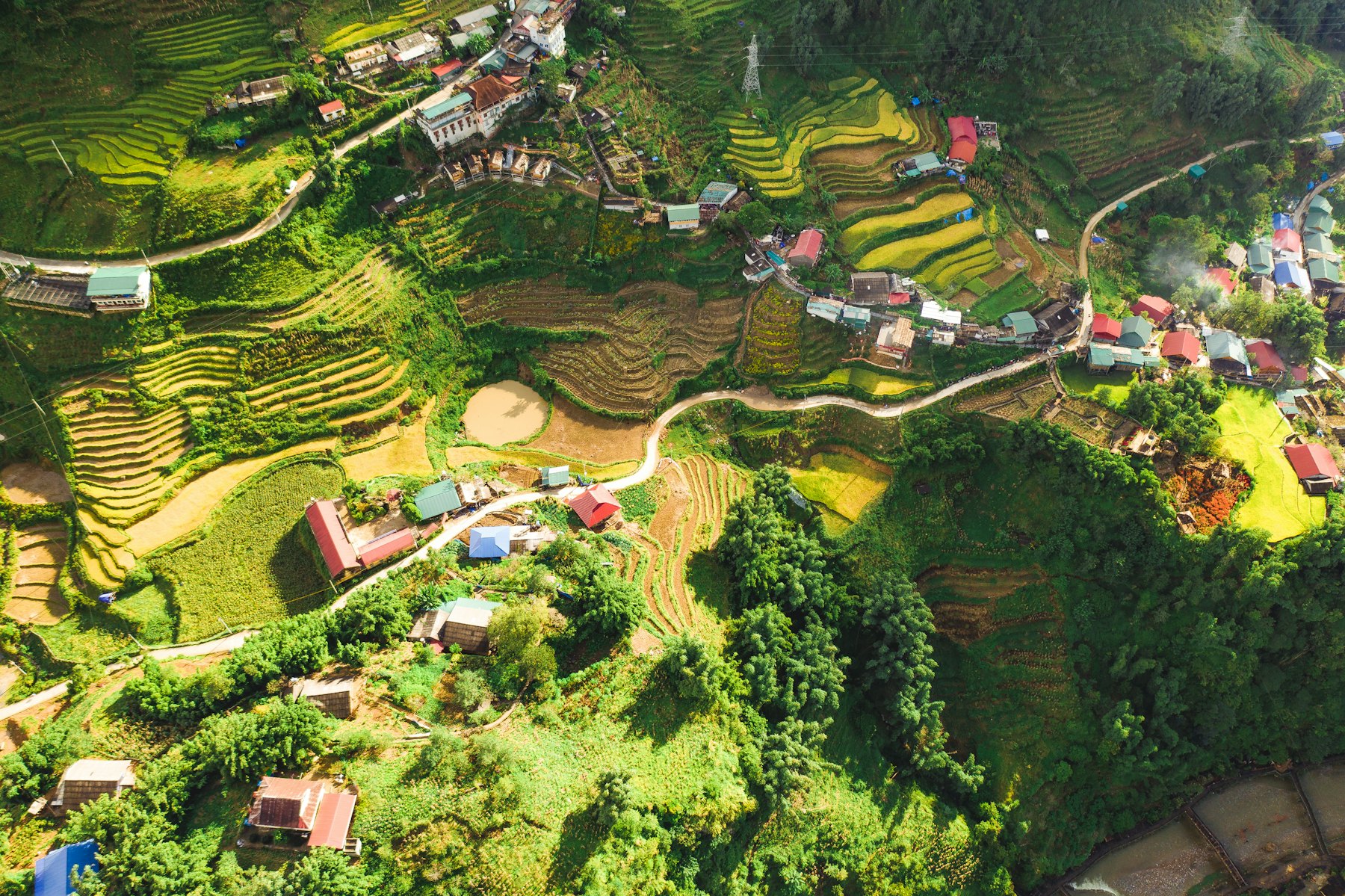
Almost every trip to China is built on the same axis: Beijing, Xi'an, Shanghai and, if you are lucky, Guilin or Hong Kong. It is a magnificent axis, but it leaves out eighty per cent of the country. There is a China that never appears in the brochures and that, all the same, is usually what people remember on the way home. You don't have to go to the ends of the earth: you just have to leave the tourist motorway.
What changes when you leave the Beijing-Xi'an-Shanghai axis
Going off route has a price and it is worth saying so up front: the hotels are simpler, fewer people speak English, the road journeys are longer and some services do not always work. In exchange, you see a China that barely exists on the standard circuit, and you see it without queues, without coaches and without crowds.
The good news is that adding lesser-known destinations does not force you to rebuild the trip. The norm is to use them as a two- or three-day extension at the end of a classic circuit, or as a full two-week trip for someone who already knows the basics. In the places with difficult logistics, a private driver and an English-speaking guide stop being a luxury and become almost indispensable.
The ten destinations at a glance
This table sums up the essentials. The detail comes afterwards, destination by destination, with the logic of each one.
| Destination | Province | Best time | Days | Difficulty |
|---|---|---|---|---|
| Xiapu | Fujian | April-May | 3 | Medium |
| Langmusi | Gansu | June-September | 2-3 | Medium |
| Danba | Sichuan | March-April, October | 2 | Medium |
| Shaxi | Yunnan | March-November | 2 | Low |
| Songyang | Zhejiang | April-May, October | 2 | Low |
| Xijiang | Guizhou | April-October | 2 | Low |
| Zhaoxing | Guizhou | April-October | 2 | Low |
| Ejina | Inner Mongolia | October | 3 | High |
| Dunhuang yardangs | Gansu | May-October | 1 | Medium |
| Enshi | Hubei | April-June, September | 3 | High |
Xiapu and the Fujian coast
Xiapu is a bay on the Fujian coast where the sea has gradually become a crop of seaweed and bamboo poles. At dawn and dusk the tide reveals a mosaic of lines and posts reflected in the water. It is a photographer's destination rather than a postcard one: anyone looking for beaches and hotels has come to the wrong place; anyone arriving with a camera will not want to leave.
- Why go: one of the most singular coastal landscapes in China, with unique dawn light and almost no international tourism.
- How to get there: a nearby regional airport and then by car; best with a driver, because the finest viewpoints are not on the tourist map.
- Best time: April and May, for the light and the salt-marsh work; autumn works too.
- How many days: three, to catch two sunrises and one sunset.
- Difficulty: medium: early starts, viewpoints without railings and dirt tracks.
It is the kind of destination where the company of a local photographer, with the tides memorised, changes the result. It is one of the areas we use on our photographic exploration trips, with a guide who knows the exact hour for each viewpoint.
Langmusi, the village between two monasteries
Langmusi sits in a valley in Gansu province, above 3,000 metres, with a monastery on each side of the provincial border. It is a small Tibetan town where monks debate in the courtyard in the afternoon and nomads come down to sell butter and yak yoghurt. You walk through meadows, climb into a narrow canyon and sleep in family guesthouses.
- Why go: authentic monastic and nomadic life, without the staging of the bigger destinations.
- How to get there: by road from Xiahe or southern Gansu; the drive is long and beautiful.
- Best time: June to September; outside that window it is very cold at night.
- How many days: two or three, with a walk to the canyon and time for the monastery.
- Difficulty: medium, above all because of the altitude and the condition of some tracks.
Danba and the stone towers
Danba, in western Sichuan, is a cluster of villages hung over green canyons, with stone watchtowers that reach thirty metres and were raised centuries ago without mortar. Every valley has its own style: houses stack up the slope as if about to fall, ringed by maize and apple orchards. It is a landscape that resembles no typical image of China.
- Why go: defensive architecture unique in the world and villages that keep their original form.
- How to get there: by road from Chengdu, seven to eight hours; you need a driver.
- Best time: spring, for the apple trees in blossom, and October, for the colour of the valleys.
- How many days: two, one for each main valley.
- Difficulty: medium: mountain roads with bends.
Shaxi and Songyang: two ways of understanding a village
Shaxi, in Yunnan, was a key market on the old Tea and Horse Road. It keeps a fourteenth-century wooden theatre and cobbles you still walk on. Songyang, in Zhejiang, is the opposite: tea valleys and adobe villages restored with care, two hours from Shanghai. One looks to the past and to trade; the other to contemporary rural life and design.
- Why go: Shaxi for its intact old town; Songyang for its adobe villages and tea fields.
- How to get there: Shaxi, by road from Dali or Lijiang; Songyang, by high-speed train to Lishui and then by car.
- Best time: March to November in both; in Songyang, April and October are ideal.
- How many days: two in each.
- Difficulty: low; both are comfortable and well connected.
Xijiang and Zhaoxing: the heart of Guizhou
Guizhou is the most ethnically diverse province in the country, and these two villages are its summary. Xijiang is the largest Miao village, with a thousand wooden houses terraced up the hillside; at festival time the women dress in kilos of silver. Zhaoxing is the largest Dong village, famous for its drum towers raised without a single nail and for the Grand Song, a polyphonic chant recognised by UNESCO.
- Why go: two distinct cultures, with their own language, dress and music, in a setting of rice terraces.
- How to get there: high-speed train to the local stations and then by car; better with a driver.
- Best time: April to October; the silver and harvest festivals cluster in autumn.
- How many days: two in each village, or four if you combine them.
- Difficulty: low; both have good Chinese tourist infrastructure.
Ejina and the desert of golden poplars
Ejina sits at the far western edge of Inner Mongolia, beside the Gobi desert. Every October, and only for about two weeks, the desert poplars (Populus euphratica) turn golden and the whole landscape transforms. The rest of the year it is an arid, empty place. Anyone who nails the date experiences one of the shortest and most powerful natural spectacles in the country.
- Why go: the forest of golden poplars in the middle of a desert, something you will not see anywhere else.
- How to get there: a flight or overnight train to the area and then by car; the logistics are serious.
- Best time: October, and within October, two specific weeks that change each year.
- How many days: three, for margin if the date shifts.
- Difficulty: high: long distances, few hotels and dates you have to pin down exactly.
The Dunhuang yardangs, beyond Mogao
Almost everyone goes to Dunhuang for the Mogao caves and the Mingsha dunes. But a few hours away, in the heart of the Gobi, is the yardang park: sandstone formations carved by the wind until they look like ships, castles and beasts. You tour it in a 4x4 and, at sunset, the light turns them into something almost unreal.
- Why go: a geological landscape from another planet, often forgotten by itineraries that only visit Mogao.
- How to get there: on a half- or full-day excursion from Dunhuang, by 4x4.
- Best time: May to October; in summer, better at sunset because of the heat.
- How many days: one, as a complement to the Mogao visit.
- Difficulty: medium: long stretches of track and exposure to the sun.
Enshi and the hidden grand canyon
Enshi, in Hubei, is a set of canyons, caves and karst formations that many people compare to Zhangjiajie, but without the queues of Zhangjiajie. The main canyon has walkways hung on the cliff wall, a green river below and a staircase that drops hundreds of metres. Nearby are the Tenglong caves and, in season, a river that turns an impossible turquoise.
- Why go: spectacular karst scenery with a fraction of the tourism of other famous canyons.
- How to get there: high-speed train to Enshi and then by car; the area is large and spread out.
- Best time: April to June and September; summer is humid and hot.
- How many days: three, because the sights are spread across several valleys.
- Difficulty: high: many stairs, steep gradients and long drives between points.
Fitting them into a real itinerary
This is not about cramming all ten into a single trip. It is about choosing two or three that fit what you are already doing. Shaxi and Songyang slot easily into a classic south-west circuit; Xijiang and Zhaoxing combine with each other; Langmusi and the Dunhuang yardangs fit a north-west route; Xiapu works as a photographic escape; and Ejina and Enshi, because of their logistics, deserve a trip of their own or a well-thought-out extension.
The criterion we use at ChinaTour.es is geographic coherence: we never add a destination just because it is beautiful, but because it does not force you to cross the country twice. JoyoTour's 150 itinerary designers know these routes and know which combination makes sense given your dates. If a destination has difficult logistics, we solve it with a private driver and a local English-speaking guide who knows the terrain.
Would you like to leave the classic circuit?
Tell us what interests you and how many days you have, and an English-speaking adviser will propose the combination of off-route destinations that best fits your trip.
Message us on WhatsAppWe're the destination agency behind ChinaTour.es. JoyoTour has been designing tailor-made trips since 1999 and has 150 itinerary designers across China, Southeast Asia, Europe and the Americas. More than 100,000 travellers have set off with us. Everything we write about here, we've travelled first.