
China has a reputation as a difficult place to travel with a family, and the reputation is unfair. It is an extremely safe country, with trains that leave on the minute, clean cities and an enormous patience for children, who are treated with constant affection in the street. What actually complicates a family trip is not China: it is the pace at which you try to cover it.
An adult itinerary with three cities in four days is a punishment for anyone travelling with children. The same trip with one main visit a day, a big park to burn off energy and a free afternoon works beautifully. This guide sums up what we have learned organising family trips: which cities deliver, how to move around, what you will and won't find, and how to handle the question of altitude.
Which cities work best with children (and why)
Not every city behaves the same with a three-year-old as with a ten-year-old. Some are enjoyed on foot, some have huge central parks, some win on a single attraction that swallows a whole day. These are the ones that work best, roughly in order of ease.
- Chengdu: the pandas, the zoo and a relaxed rhythm. Probably the easiest of the big cities with children.
- Beijing: the Great Wall at Mutianyu, with cable car up and toboggan down, is an unforgettable day for children.
- Shanghai: Disneyland and the interactive museums, with a clean and very legible metro.
- Guilin and Yangshuo: boats, bikes and very little city. Ideal from about four years old.
- Xi'an: the Terracotta Army and a city wall you can ride on family bikes.
- Hangzhou: West Lake, with boats, parks and a slow pace an hour from Shanghai.
By contrast, a few destinations are better left for later with small children: mountain temples with hundreds of steps, circuits with six-hour driving days, and crowded markets at midday. They are not dangerous, they simply do not repay the effort once a child is tired. Being honest about this in advance is what keeps a family trip enjoyable from the first day to the last.
Chengdu: the panda day that never fails
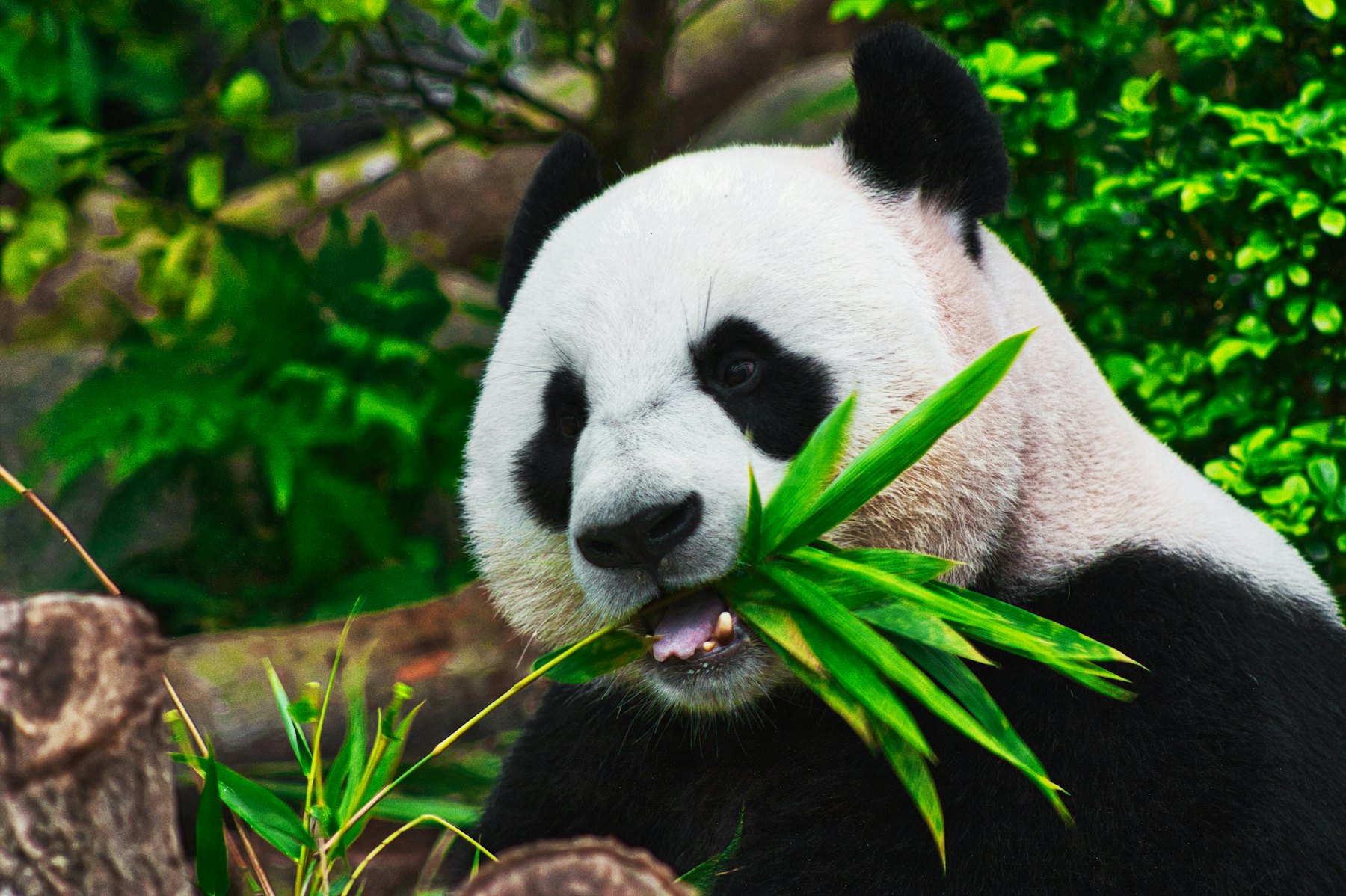
If there is one visit that works with any child, from two to twelve, it is the panda breeding centre in Chengdu. It sits north of the city and is about forty minutes away by taxi or metro. The important thing is to go early: the pandas eat and play between about 7.30am and 10am, and after that they sleep until late afternoon.
The visit is done on foot and takes three or four hours. There are two main zones, the adults and the cubs, plus a nursery where, depending on the season, you can see very young animals. Bring water, a hat and comfortable shoes, and do not carry food or visible plastic bags, because they are banned to protect the animals.
The afternoon in Chengdu can be spent with almost no effort: a riverside park, a no-chilli cooking class where the child makes their own dish, or the Kuanzhai alleys with their wide lanes and lanterns. Chengdu is also the city where Sichuan food can be ordered mild, so no one has to give it up if they don't like heat.
Beijing with children: how not to burn out the group
Beijing has three or four unmissable visits and all of them are big, slow and crowded. With children the strategy is to choose one a day and never stack them. The Forbidden City, for instance, is not a place to walk end to end with a small child: go in through the south gate, follow the central axis and leave by the north exit, without trying to see everything.
The Great Wall at Mutianyu is the best family option: there is a cable car up, a toboggan down that children remember for years, and far fewer crowds than other sections. Other visits that work well are the Temple of Heaven park, with groups of retirees singing and dancing at dawn, and an afternoon among the hutongs, the traditional lanes of the old centre.
Shanghai: Disney and everything else
Shanghai Disneyland is smaller than the ones in the United States, and precisely for that reason it is easy to cover in one or two days with children. You reach it by metro, line 11, without needing a car. Book fixed-date tickets online and download the official app, which shows live waiting times and lets you plan the day around the shortest queues.
Outside the park, Shanghai has a great deal for families: the Pudong aquarium next to the Pearl Tower, with a shark tunnel that never fails; the enormous and very interactive Science and Technology Museum; and the maglev train that reaches the airport at over 400 km/h, an eight-minute ride children treat as an attraction in its own right.
Walk the Bund at dusk, when the lights come on across the river. It is short, flat and fuss-free, and the view from the waterfront is a good way to close the day without any effort at all.
Guilin and Yangshuo: water, bikes and a slower pace
Guilin and the Yangshuo area are the perfect counterpoint to the big cities. The high-speed train from Guangzhou or Guiyang is comfortable, and once you are there the landscape of limestone peaks rising out of the rice fields changes everything. The Li River cruise lasts about four hours, runs on covered boats with an open upper deck, and asks nothing of you but to look.
In Yangshuo you can rent bikes and tandems and pedal between villages and fields. For children the best fun is the motorised bamboo rafts on the Yulong River, smaller and calmer than the big cruise. The Reed Flute Cave, with its coloured lights, also works well because it is cool inside and has no impossible stairs.
High-speed trains with children: the practical part
The high-speed train is the best way to move around China as a family: punctual, clean, fast and with room for everyone. Security at the station is like an airport, so allow about twenty minutes of margin before departure, and more at the big stations such as Beijing or Shanghai, where the walk to the platform alone can take ten minutes.
- Children under six travel free, but without their own seat; from six to fourteen they usually get a reduced fare.
- Everyone needs their own named ticket with a passport number, babies included.
- When we organise the trip, we reserve the group's seats together, which is not always easy in peak season.
- Toddlers must be carried or kept in a stroller while boarding; the platform is wide and flat.
- On the platform, follow the coloured floor markings: they show where each carriage stops and stop people rushing.
- Bring a bag with water, fruit and wipes; the dining car is not always open on short routes.
One trick that saves a lot of grief: check in one extra bag and don't carry everything on your back. In China you can travel with a stroller without any problem inside stations and trains, as long as you fold it to board. Staff are generally helpful with families, and a child in a stroller tends to move you to the front of any queue.
Food, milk and nappies: what you will find and what you won't
In the big cities you will find almost everything, but don't assume your own supermarket's brands and formats are waiting. Formula, nappies and baby food exist, above all in import supermarkets and through online delivery to your hotel, but the brands and sizes are different from those in the UK, the US or Australia.
- If your baby uses a specific formula, bring it from home for the whole trip: switching brands can upset them.
- Nappies are sold in any supermarket, but sizes and styles vary; check the equivalent before you rely on it.
- Jarred baby food turns up in import shops, not in every neighbourhood store.
- Baby-changing tables in public toilets are rare, often only in the women's; carry a portable mat.
- High chairs appear in modern restaurants and hotels, not in small local places.
- Children's menus as you know them are rare; the easy answer is a mild vegetable dish and rice to share.
As for eating, Chinese children at the table eat plain rice, steamed vegetables, soup and chicken, all with gentle flavours. A plate of rice with greens and some chicken solves most meals, and you can always ask for no chilli using the phrases you will be using yourself.
Tickets, discounts and the height rule
In China child discounts follow a mixed rule of age and height, and it is worth knowing before you buy. On trains the reference is age: under six travel free, six to fourteen pay a reduced fare. At many attractions, however, height is still measured, with bands around 1.20 m and 1.50 m, so a tall five-year-old can be charged where a short one is not.
- Always carry the children's passports: they are needed to book tickets and to claim age-based discounts.
- Big public museums and parks are usually free or very cheap for under-sixes.
- At Disneyland, ride passes are organised by height, not age.
- Tickets to the Forbidden City and the main museums are booked in advance and in the holder's name.
- Keep tickets on your phone: in many places a code is scanned, not a piece of paper.
Strollers, stairs and the pace of the day
China's big cities are becoming more accessible, but accessibility is not uniform. The Shanghai and Beijing metro has lifts in almost every station, though not always at the exit you want. Historic centres and temples, on the other hand, are full of steps and stone thresholds where a stroller simply jams.
- Carry a light folding stroller; if it is large, it will complicate taxis and lifts.
- For the Great Wall and mountain temples, a baby-carrier backpack beats a stroller every time.
- Pavements have uneven tiles and high kerbs: anticipate the bumps.
- A large open stroller may not fit in a taxi; always fold it before you get in.
- Child car seats in taxis are rare, so if you travel by private car, request them in advance.
The other factor that decides the trip is not the stroller, it is the pace. If you remember only one thing from this guide, make it this: one block a day. A block is one main visit in the morning, with the afternoon free to rest, play in a park or swim at the hotel. At that rhythm children last the whole trip in good humour, and so do the adults.
- Never two cities on two consecutive days; leave at least two nights at every stop.
- Put the long visit in the morning and keep the afternoon for rest.
- Alternate an urban day with a nature or park day.
- In summer, avoid the middle of the day: the July and August heat is brutal.
- Always have a plan B indoors for rainy or extremely hot days.
A well-designed family trip is not an adult trip cut in half. It is a different trip, with fewer cities, more time in each and more space for the unexpected, which is usually what children remember.
What about altitude? Qinghai and Tibet with children
The Tibetan plateau sits above 3,000 metres, and it is not a destination for babies. Very young children cannot explain a headache or the dizziness of altitude, and in them altitude sickness is harder to spot. As a general rule we do not go above 3,000 metres with children under two, and we assess older children case by case.
From six or seven, many children handle the plateau without trouble, provided the ascent is gradual and there are acclimatisation nights. Qinghai Lake, at 3,200 metres and two hours from Xining, works well as a family's first taste of altitude. Lhasa, at 3,650 metres, deserves a serious conversation with your doctor before you decide.
If there is any doubt, the best thing is to raise it before booking. JoyoTour, the group behind ChinaTour.es, assesses each case with the itinerary in front of it and, when sensible, redesigns the route to stay below 3,000 metres so the family doesn't have to give up the trip. Our vehicles carry oxygen on board and the guide knows exactly what to do if someone starts to feel unwell.
How a family trip is put together without surprises
A family itinerary is not built by trimming an adult one. It is built from scratch, thinking about ages, sleep schedules, how long each child lasts in a car and which days should have nothing in them at all. That is why it is worth telling whoever designs the trip everything: each child's age, their quirks, whether they use a stroller, whether anyone gets car-sick.
JoyoTour has 150 itinerary designers across several countries and one person assigned to your trip from start to finish, with English-language support and WhatsApp replies throughout the journey. ChinaTour.es brings together the family itineraries and the child-friendly experiences, from Chengdu to the Great Wall.
With children, safety and patience are worth more than the number of cities. A well-planned trip to China becomes the family memory of the year; a badly planned one becomes an exhausting race. The difference is almost always the pace.
Shall we plan it around the children?
Tell us the ages, whether they use a stroller and how many days you have. An English-speaking adviser will design a family itinerary through China at the right pace, with comfortable stops and everything booked in advance.
Message us on WhatsAppWe're the destination agency behind ChinaTour.es. JoyoTour has been designing tailor-made trips since 1999 and has 150 itinerary designers across China, Southeast Asia, Europe and the Americas. More than 100,000 travellers have set off with us. Everything we write about here, we've travelled first.