
Chinese festivals divide travellers into two groups. The first plans around them and gets drumming, lanterns, dragon boats, full moons and a country at its most alive. The second walks into them by accident and gets closed museums, sold-out trains and hotels at twice the price of the week before. There is no third group.
The complication is that almost all the important festivals follow the lunar calendar, so the dates move every year, and the national holidays attached to them move with them. This guide gives you the 2026 and 2027 dates, what each festival actually looks like on the ground, and how to plan travel so that a festival is a highlight rather than an obstacle.
The calendar you need before booking anything
The table below covers the festivals that genuinely affect travel. Treat the days as indicative: the lunar calendar shifts year on year, so confirm the exact dates once your flights are chosen, and check the official holiday announcement, which is usually published late in the preceding year.
| Festival | 2026 | 2027 | What it is | Travel impact |
|---|---|---|---|---|
| Chinese New Year | 17 February | 6 February | Two weeks of family reunions, fairs and fireworks | Extreme in the first three days, very busy for two weeks |
| Lantern Festival | 3 March | 22 February | Lantern displays close the New Year period | Local, mostly an evening event |
| Qingming | Around 5 April | Around 5 April | Tomb-sweeping and spring outings | Three-day weekend, trains busy |
| Dragon Boat Festival | 19 June | 9 June | Boat races and sticky rice parcels | Three-day weekend, races worth seeing |
| Mid-Autumn Festival | 25 September | 15 September | Mooncakes and family reunions | Three-day weekend, lake towns full |
| National Day, Golden Week | 1–7 October | 1–7 October | The founding of the People's Republic | The busiest week of the year |
Chinese New Year: magnificent and genuinely difficult
Chinese New Year, chun jie, is the biggest event in the country and the one most likely to derail a trip planned without it. The first two or three days are the quietest — many small shops and restaurants close, museums shut, and cities empty as people travel home — and then everything reopens and begins moving at a volume you will not have seen anywhere else.
What you actually want to see happens in the first week: temple fairs with acrobats and paper-cutting stalls, lion dances, red lanterns strung across old streets, and the extraordinary surge of people through stations and airports. Beijing's temple fairs at Ditan and Longtan parks, the flower markets of Guangzhou and Hong Kong, and the lantern displays of Xi'an are the most accessible set pieces.
What it costs you is flexibility. Railway tickets go on sale about fifteen days before departure and sell out within minutes for the days either side of the holiday. Flights are expensive and hotels in the big cities and the popular small ones can double. If you want to travel during Chinese New Year, book the trains, the flights and the hotels as far ahead as the systems allow, and build in slack.
Lantern Festival, and the spring weekends
Fifteen days after New Year, the Lantern Festival closes the holiday with illuminated displays in parks, temples and old streets. It is essentially an evening event and easy to enjoy: the city wall in Xi'an, the Confucius Temple in Nanjing and the Yu Gardens in Shanghai all put on installations, and the crowds are good-natured and enormous. Tickets are not usually needed for the public displays but the metro runs late and is packed.
Qingming, in early April, is the grave-sweeping festival and a public holiday, which means three days of domestic travel and full trains. For a visitor it has an unexpected benefit: it coincides with spring, and the whole country goes outdoors. The downside is that the same three days are when everyone else does too, so the classic sights and the suburban parks are crowded.
Dragon Boat and Mid-Autumn: the two easiest to enjoy
The Dragon Boat Festival in June is the most photogenic and the least disruptive of the major holidays. Crews of twenty row long, painted boats to drum beats on rivers and lakes across southern China, with the best-known races in Guangzhou, Hangzhou, Hong Kong and the Dong villages of Guizhou. It is a three-day break, so book trains a week ahead, but the racing itself is mostly free and open air.
Mid-Autumn, in September or early October, centres on the full moon, mooncakes and family reunions. For a traveller, the best versions are the ones staged outdoors: the lakeside promenades of Hangzhou and Suzhou, the Bund in Shanghai, and the old towns along the canals, where lanterns are set on the water. Mooncakes, incidentally, are an acquired taste and worth trying once.
Golden Week: the one to avoid, or to use cleverly
The first week of October is a national holiday, and it is the single busiest travel period in the world by volume. Hundreds of millions of people move at once. High-speed trains are fully booked, internal flights are at peak fares, hotels in tourist areas hit capacity weeks early, and headline attractions such as the Forbidden City, Zhangjiajie and Huangshan operate at their daily caps and turn people away.
If your travel dates are fixed around that week, there are two workable strategies. The first is to go where the crowds are not: the far northwest of Gansu and Qinghai, the grasslands of Inner Mongolia, or a single city where you book a good hotel four to six months ahead and use it as a base rather than moving. The second is to accept the crowds at one headline site only, booked with a timed entry, and then spend the rest of the week in smaller places.
Ethnic and regional festivals the tourist circuit ignores
Beyond the national calendar there is a second set of festivals, celebrated by minority communities and far more rewarding to witness, with almost no tourists and a great deal of colour. They are harder to reach and require flexible planning, which is precisely why they stay special.
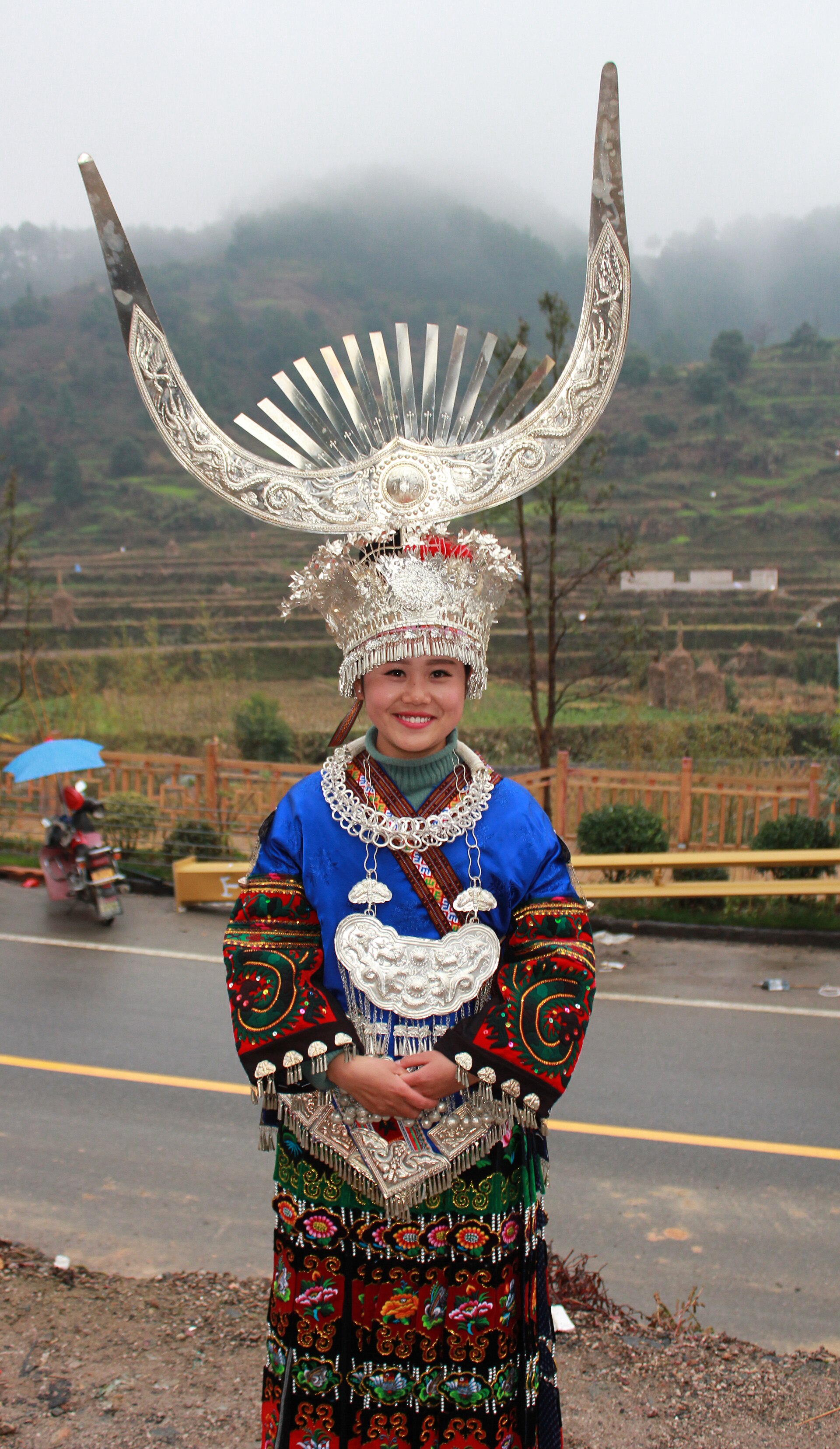
In Guizhou, the Miao New Year brings villages around Leishan and Xijiang together for days of feasting, buffalo fights and dancing in full silver headdresses, usually in the tenth lunar month, that is late autumn. In spring, the Sisters' Meal Festival near Taijiang, on the fifteenth day of the third lunar month, is one of the most spectacular costume festivals in the country. In Xishuangbanna, the Water Splashing Festival in mid-April turns the whole city into a water fight, with Buddhist ceremonies in the mornings.
Further north and west there is the Yi Torch Festival in Liangshan around the twenty-fourth day of the sixth lunar month, when torches are carried through the fields at night; the Nadam Fair of Inner Mongolia in midsummer, with wrestling, archery and horse racing; the Shoton Festival in Lhasa in August; and the great Tibetan pilgrimage festivals of the plateau. Most involve travel to remote regions, permits in some cases, and a good local guide.
What closes, what stays open
It helps to know that Chinese holidays do not shut the country down the way a European public holiday sometimes does. Transport runs, the metro runs, mobile payment works and the big attractions open, usually with extended hours. What closes is smaller and more local: independent restaurants, family shops, some museums on their weekly rest day, and public offices.
The pattern on the first three days of Chinese New Year is the one that surprises people: in smaller cities, a large share of restaurants close because the staff have gone home, and you may find yourself eating in a hotel dining room or a chain. From the fourth day the city reopens, and by the end of the holiday it is in full swing, which is when the temple fairs and the street celebrations peak.
- Transport: trains, planes, metro and long-distance buses run right through every holiday.
- Attractions: the big sites stay open, often with extended hours and timed entry.
- Restaurants: independent places in small cities close for the first three days of New Year.
- Museums: many shut on Mondays all year, and some close across the New Year period.
- Shops: chains and malls stay open; family-run stalls may vanish for a week.
- Officials: banks, visa offices and public services stop entirely for the holiday week.
Building a festival into the trip, rather than around it
The best way to use a festival is to make it the fixed point of the itinerary and let everything else move. Choose the festival you actually want — a dragon boat race, a lantern festival, the Sisters' Meal Festival, the moon over West Lake — lock the dates, then build the route backwards from there, adding days for travel and a spare day at each end.
Two things make the difference between a dull festival and an unforgettable one: being in the right place rather than a big city, and having someone with you who knows what is happening and when. Most major events have a schedule that is announced days, not months, in advance, with processions, specific villages and specific hours that no guidebook captures.
That is one of the places where a local operator earns its fee. ChinaTour.es, the English-language site of the JoyoTour group, builds itineraries around the festival calendar with a licensed English-speaking guide, and confirms the actual programme with the communities and organisers a few days before, so you are standing in the right village at the right hour rather than in a car park.
Want to travel around a festival?
Tell us which festival interests you and roughly when you can travel, and an English-speaking adviser sends you a route built on the confirmed dates, with tickets, guide and transport included. Message us on WhatsApp and we reply within three business days.
Message us on WhatsAppWe're the destination agency behind ChinaTour.es. JoyoTour has been designing tailor-made trips since 1999 and has 150 itinerary designers across China, Southeast Asia, Europe and the Americas. More than 100,000 travellers have set off with us. Everything we write about here, we've travelled first.